A Lonely Summer
JulY 1996
In the summer of 1996, my father received orders to the Marine Safety Office in Providence, Rhode Island. I had never heard of Rhode Island prior to this news, but I wasn’t interested.
I loved Virginia. I had a best friend, and I slept over at his house almost every weekend. I loved my soccer team and the people on it. I loved my school and my neighborhood. I didn’t want to leave, but I knew I had no choice. That’s the life of a military child.
My parents found a house in Portsmouth, on Aquidneck Island, and tried to sell me on it by explaining that there was a beach at the end of the street, a sports complex with soccer fields right down the road, and that we would be closer to my cousins in Connecticut. I wasn’t falling for it.
The day before we left, my best friend was over at the house. When his parents came to pick him up, I remember running down the street barefoot, waving at him. I cried on the walk back and tried to shake it off before my parents saw me.
The first thing I noticed about living in Rhode Island was that the people were not friendly. None of the neighbors came to greet us or bring us casseroles. Nobody waved. Nobody played out in the street.
It felt lonely.
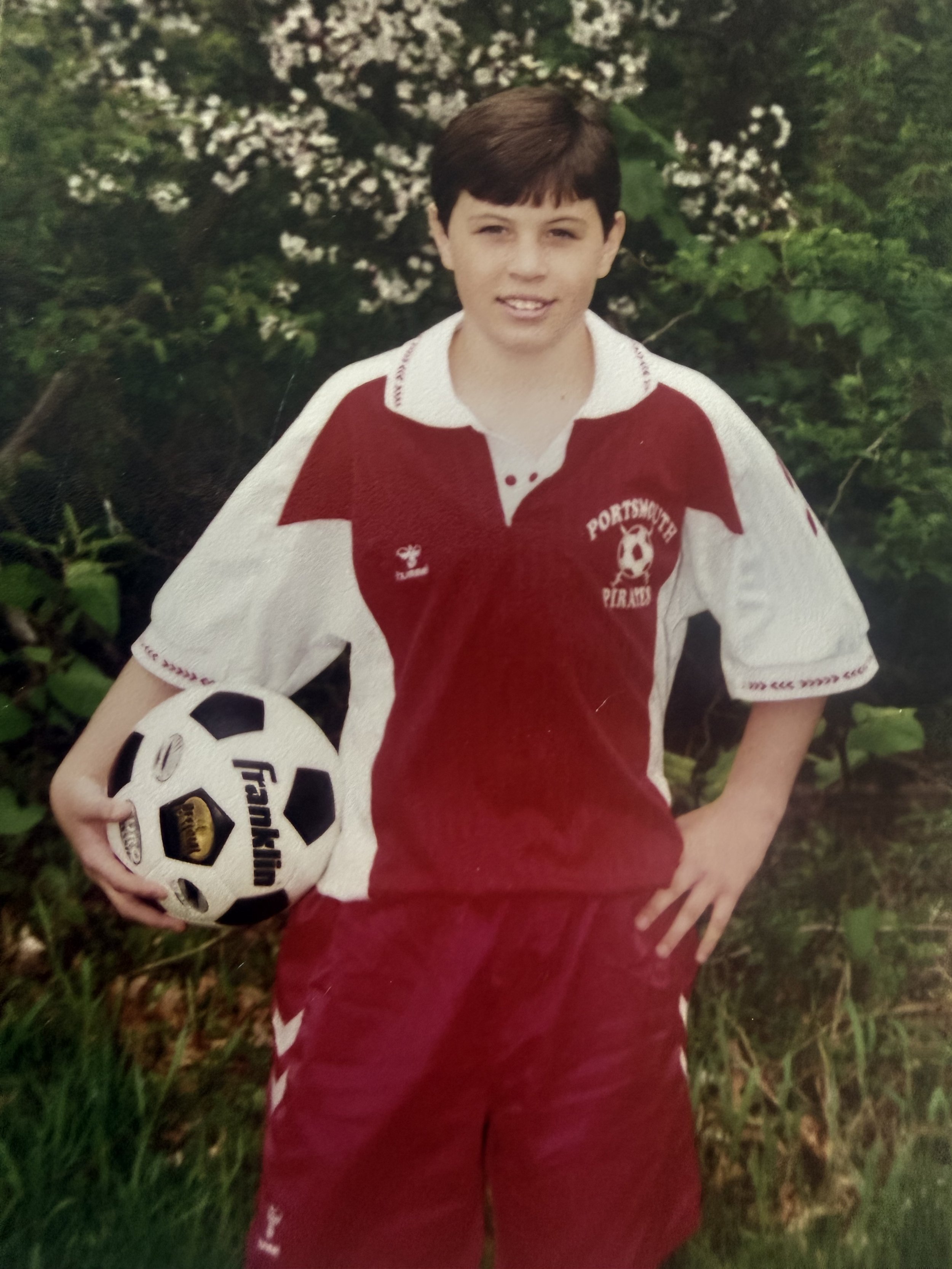
Eventually, we met one of the neighborhood kids, and while our parents were talking, youth soccer came up. My mom tried to gather all the intel, and we learned that the Portsmouth Pirates under-12 team was a tour de force. Making that team would be extremely difficult. Tryouts were later in the fall. I missed my friends and my old teams, and I was the loneliest I had ever felt, but making the soccer team in the fall gave me a purpose.
Our house was situated on nearly an acre of land and had a huge backyard. I had a goal that we built with PVC pipes and a net, and the backyard was transformed into my training grounds. I would wake up, eat breakfast, and schedule the day’s training. I would normally have morning and afternoon sessions planned out, with conditioning included. I’d set up cones and dribble around them. I’d set up targets and shoot at the net. I’d punt balls in the air and practice trapping them with as few touches as possible. I’d run sprints and agility drills. I ran every drill I could think of and would spend hours in the backyard by myself. That summer was when I first realized sports and fitness made me feel better, even when everything else felt wrong.
When I got to the tryout, I was clearly an outsider. Everyone knew each other. Everyone had grown up playing soccer together. My father would later refer to them as “the good ole boys.” After living in Virginia for the past five years, I had developed a Coastal Virginia drawl, which made it even more obvious to the Rhodies that I wasn’t from around there. Nobody wanted anything to do with me. Nobody talked to me. Nobody wanted to be my partner for warmups or drills. It bothered me, but I was there to play soccer, and I had something to prove.
I gave that tryout everything I had. Every touch of the ball felt clean. My conditioning felt incredible. I was faster than I had ever been. I knew that I was prepared.
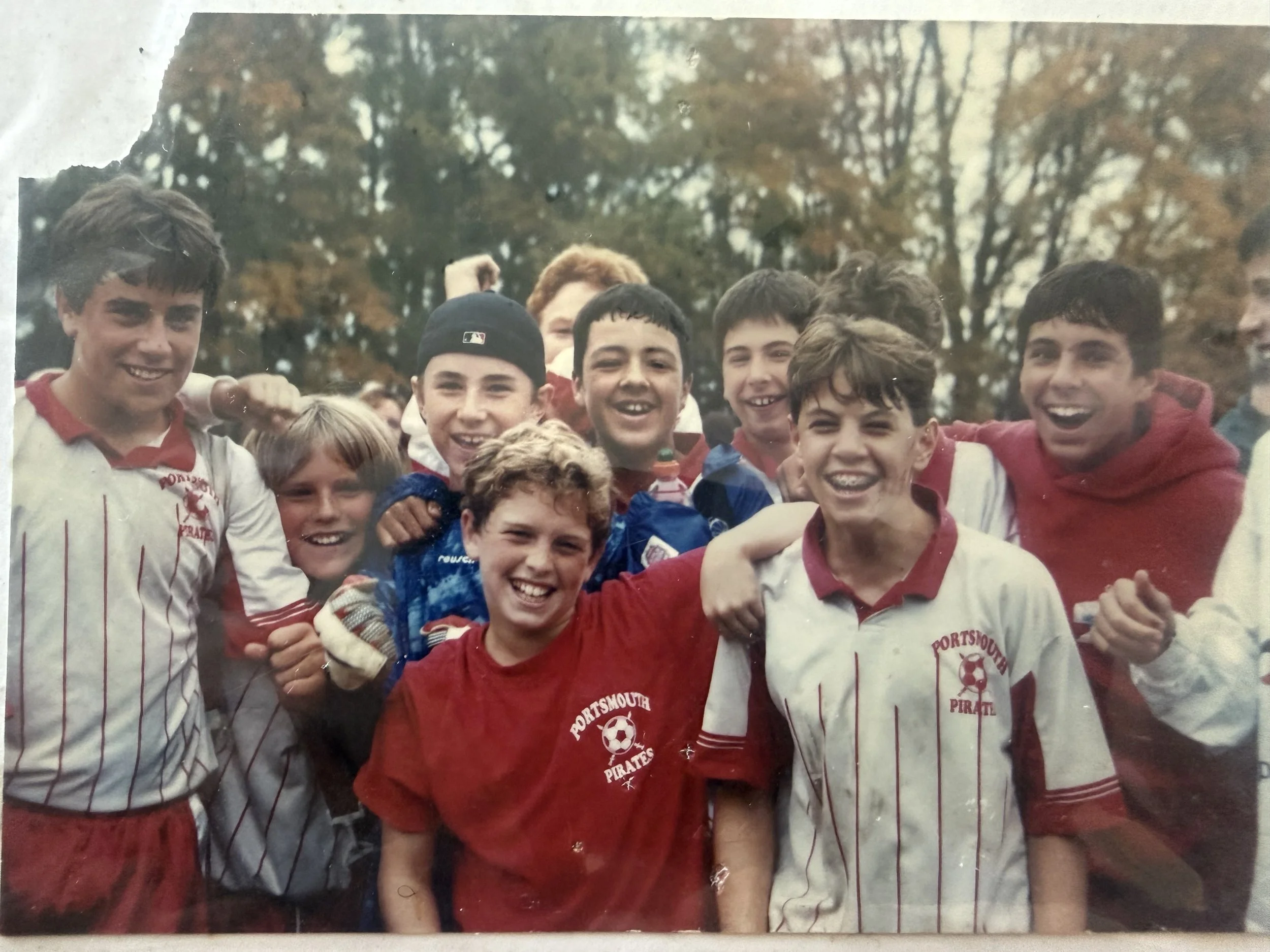
The coaches noticed. Not only did I make the team, but I infiltrated the “good ole boys” starting lineup. Once I was on the team, they slowly began to accept me as one of their own. Over time, the same boys who barely spoke to me at tryouts became some of my best friends, bonded through the shared joy of sport.
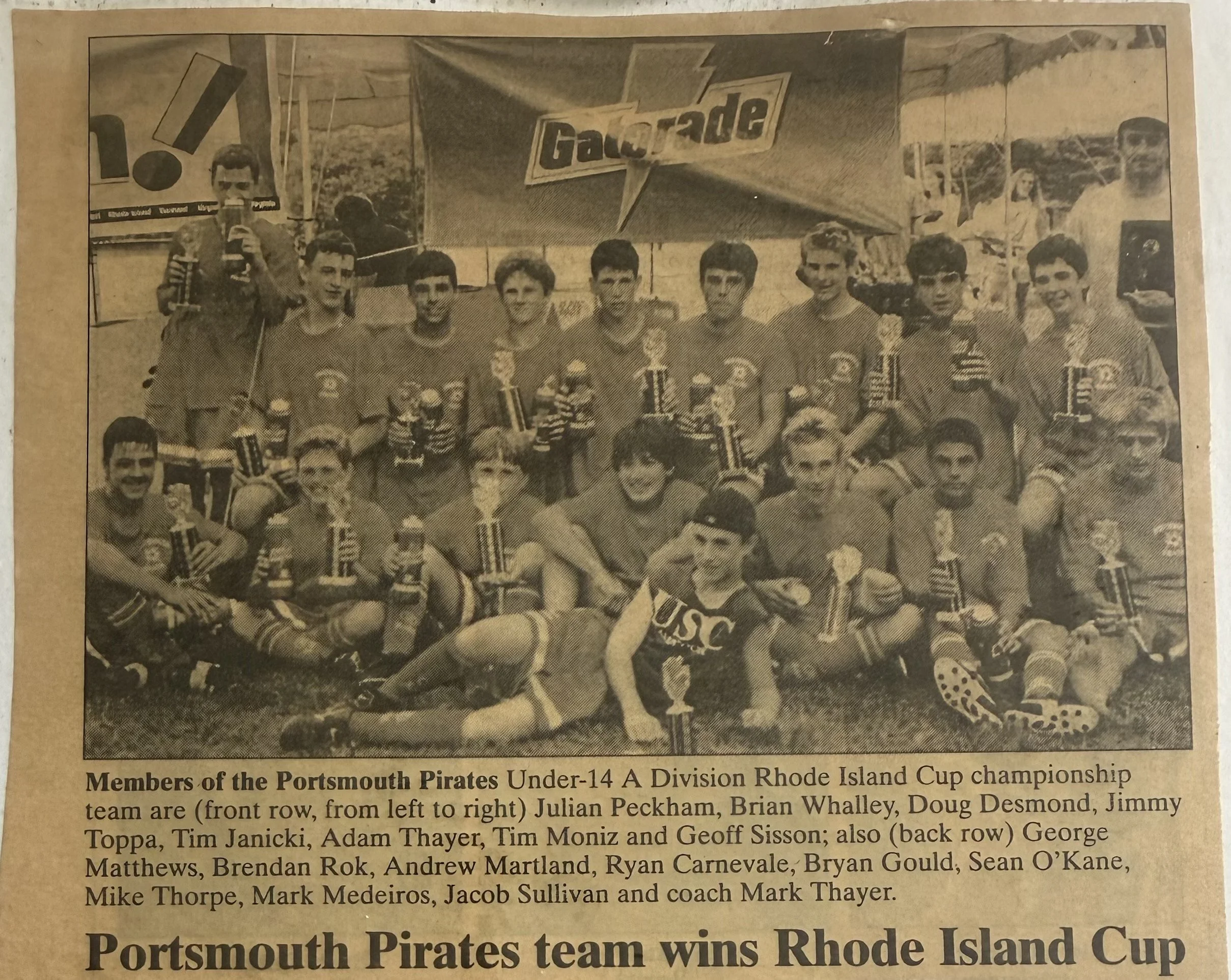
I would continue playing with the Portsmouth Pirates all the way through the under-14 team, where our season culminated in winning the Rhode Island State Championship. We were celebrated by our families and friends, the newspapers, and the whole town. It was a proud moment for all of us and the perfect way to finish my youth soccer career.
Everyone saw the wins. Nobody saw that first summer. Nobody saw the cone drills, the sprints, the shots on goal, the blisters, or the sweat from hours I spent trying to turn loneliness into preparation, but that summer taught me something I would carry for the rest of my life.
Most of the time, the work that matters is the work nobody sees.