Drowning
May 28th, 2004
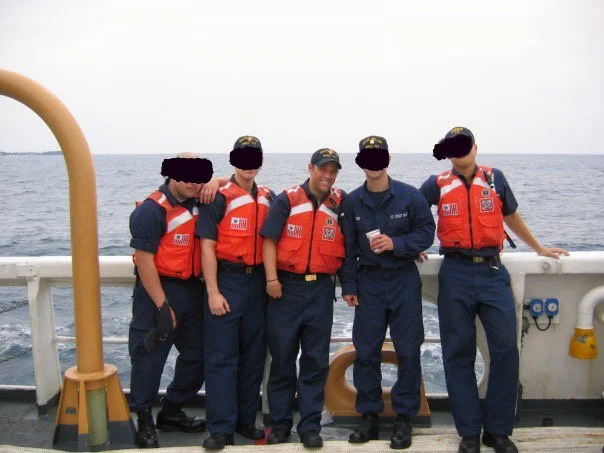
After surviving my fourth-class year, I embark the Coast Guard Cutter Mellon in the summer of 2004 in Dutch Harbor, Alaska, and sail across the Bering Sea and Pacific Ocean to Singapore. We are in port for several days, and I explore every part of the country. This is before Wi-Fi, Travelocity, or Yelp, so I develop a technique where I go to souvenir shops and peruse the postcard racks. I study the photos on the postcards because, generally, they showcase the area’s greatest hits. I see what piques my interest and head off into the unknown.
I see a postcard for Sentosa Island Beach Resort. There is an image of the suspension bridge spanning Palawan Island, the southernmost point of continental Asia. I take off into the sweltering heat and head for the beach. The beach is a tropical paradise shaded by palm trees, where monkeys and peacocks wander through groups of tourists admiring the crystal-clear water. I spend most of my free time in Singapore at Sentosa Island, swimming in the calm, warm water and trying to escape the oppressive rainforest heat.
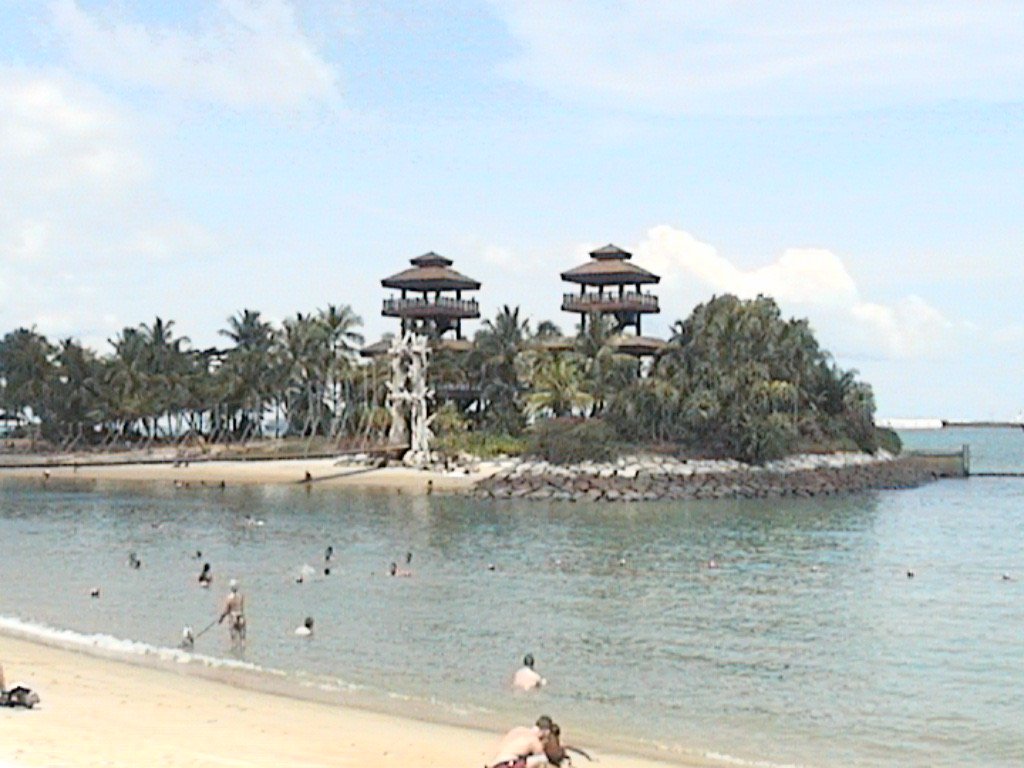
While enjoying the beach one afternoon, we traverse the small suspension bridge to Palawan Island and while walking over the bridge, we notice a crowd gathered on the beach near the bridge’s entrance.
This area is home to Underwater World Singapore, an aquarium where famed pink dolphins perform. We assume the crowd has gathered to see the show. While trying to spot the dolphins, we are startled by a lifeless body on the beach.
From the bridge, I see lifeguards attempting CPR, and I immediately run onto the shore and through the crowd to see if I can help. The boy in the sand is maybe ten years old, petite and skinny, with smooth tan skin and dark hair. There is a mix of foam and vomit around his mouth, his eyes are rolled back in his head, and he is covered in sand. One lifeguard is attempting chest compressions, heaving his weight into the boy’s small, fragile ribcage and forcing him deeper into the soft sand. A second lifeguard is vomiting in a panic. The boy’s father is standing behind the lifeguards, hysterical, frantically screaming and praying for help, hoping for a miracle. The crowd stares down silently at the horrific scene, and everyone is hanging on every moment, waiting for the boy to take another breath waiting to see any sign of life.
As a beach lifeguard, I know that chest compressions are far more effective on a backboard or hard surface than on sand, so I run to the nearby beach bar to try to grab something solid to support the boy’s body. I come back with a folding table and help the lifeguards pull his limp body onto the surface. As I tell the lifeguards that I am ready to take over CPR, a police officer grabs me. He says that I can’t help because I could be liable and go to prison if something goes wrong.
In the days before arriving in Singapore, we had several briefings aboard the cutter about liberty, local customs, and the seriousness of Singaporean law. The message was clear. DO NOT get in trouble here. We heard of people being fined for spitting in public, caned for vandalism, and arrested without the protections we were used to back home. We were young, far from home, and told story after story about how small mistakes could carry serious consequences. Whether every detail was perfectly accurate or exaggerated to keep a ship full of us in line, it worked. By the time we stepped off the cutter, Singapore existed in my mind as a place where one wrong move could ruin my life.
Now terrified that I will make a mistake and end up in a Singapore prison, I am basically useless. Kneeling in the sand, I offer what little assistance I can. I help count compressions and encourage the lifeguards to continue fighting for his life, but mostly I watch helplessly.
I watch, knowing that with each passing moment, the boy’s chances of survival plummet. I grab the young boy’s hand, squeeze it, and can’t believe how limp it feels. There is no heartbeat, no life, just cold, damp skin.
Several minutes later, an ambulance arrives, and they load the boy onto a stretcher and into the back of the vehicle.
I am certain I watched that young boy die on the beach that day.
After seeing that boy’s life fade away on the beach, I continually asked why.
Why was I there that day? Why couldn’t I have walked over the bridge earlier and seen him drowning? Why did he drown in perfectly serene water? Why couldn’t the lifeguards save him? Why couldn’t I save him? Why was the plan for me to travel across the world to see a boy die?
I needed to find some meaning in the tragedy, and eventually I did.
My whole life, I wanted to be a pilot in the Coast Guard, and watching that boy drown, I realized why. I realized I needed to spend my life trying to protect people from ever suffering that loss. I came face to face with the dangers of open water, and face to face with death, as I watched a father lose a son. I could never forget watching that father’s suffering. That moment became my “why” and would fuel me through the greatest challenges in my life.