My Only Regret
February 2014
In the summer of 2013, it is time for me to leave Air Station Borinquen and head to my next unit. I am presented a departure award before I go, and it says I’ve saved or assisted 117 people. That sounds like a lot, and I should be proud of it, but I’m not. All I can think about is what’s not on the award, all of the loss. It’s hard for me to celebrate the people I’ve helped when there were so many other times I couldn’t be the miracle people had hoped for.
As I reflect back on my time in Borinquen, I think about losing Thomas and Dale.
I remember hoisting the dead pilot and dropping him in a pile on the beach.
I remember a case I had off a beach in St. Croix. A father was enjoying his vacation and playing in the water with his two young children. They got into some surf and a bit of current and found themselves in distress. The father grabbed his younger daughter and dragged her to shore, thinking that his older son would be able to make it right behind him. His son got swept out, and they lost sight of him. We searched around that beach all night long. We flew back and forth, pattern after pattern, hoping to find his son. The whole night, we could see his parents on the beach with local law enforcement, searching with flashlights, hoping for a miracle that never came.
I remember a case where a boat full of migrants collided with a shallow reef at high speed while evading a law enforcement boat. Many of the migrants were thrown into the water, and several were severely injured. We flew overhead, looking down at the carnage and searching for battered bodies. We could hear the painful screams of the poor families every time we called our small boat on the radio.
I remember so many cases of desperately searching and then losing hope. I remember mostly feeling like I came up short. I want to remember the 117 people, but I don’t.
I believe in the mission, and I am happy I had the chance to do so much search and rescue, but I am struggling after searching for fathers, mothers, sons, and daughters that I never find. I am struggling after so much loss and heartbreak. I need a break, and I want to do something different. I need a mission where success and failure don’t depend on whether people live or die.
I request to go to the Helicopter Interdiction Tactical Squadron, HITRON, in Jacksonville, Florida, to fly armed helicopters and interdict drug boats. I know that I’ll spend a good portion of the year deployed aboard ships and flying extremely dangerous missions, but I know it will be a nice change of pace.
There are a couple of other reasons Jacksonville is at the top of my list.
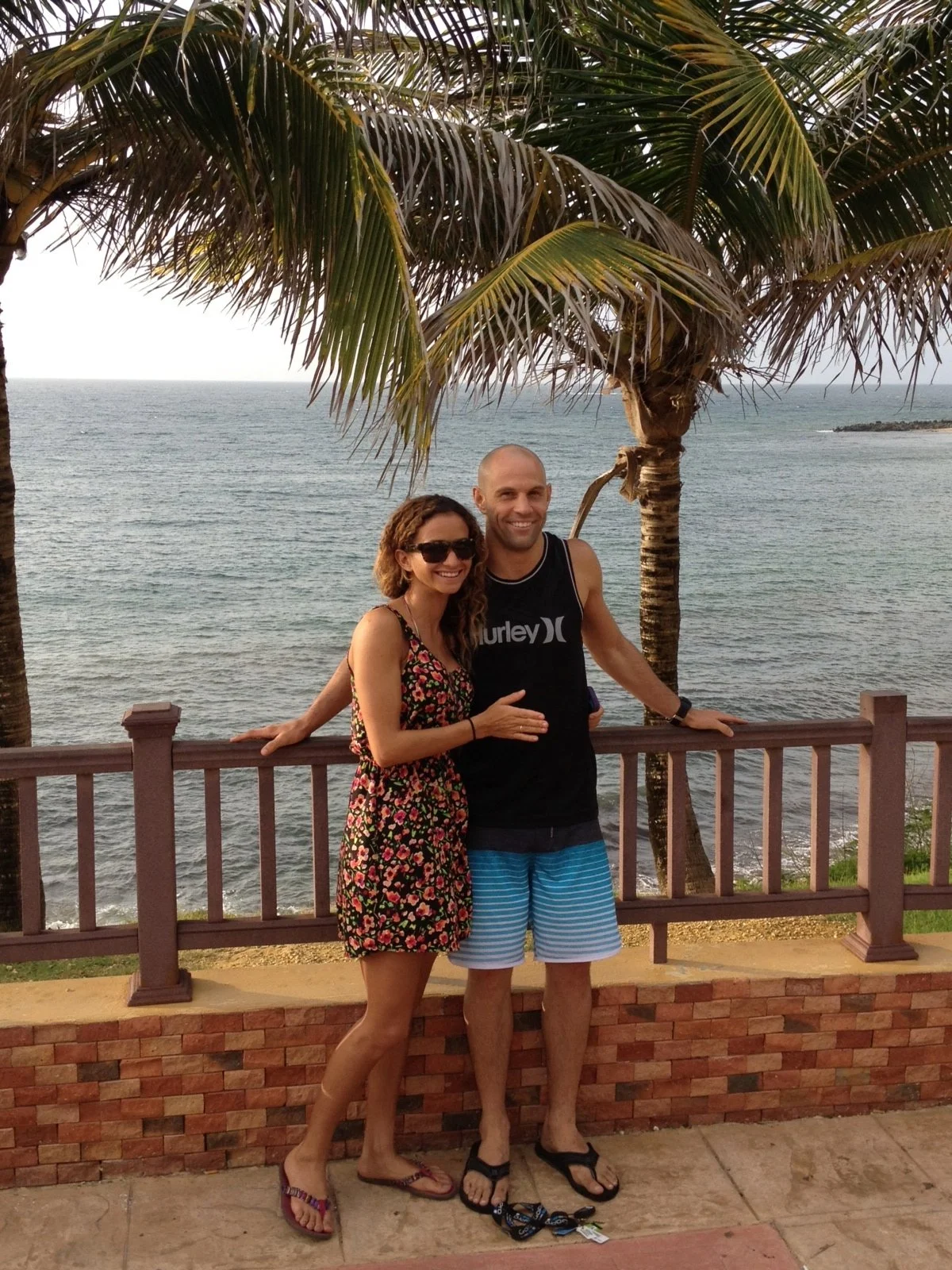
Things are getting pretty serious with Natalie. Natalie has watched all of my friends meet the loves of their lives and get married, and she is dropping subtle hints that she’s ready for a wedding. By subtle hints, I mean writing “wedding ring” on every Christmas list, sending me her ring size and the types of rings she likes before her birthday, singing her own rendition of Beyoncé’s “Single Ladies” by just repeating, “If you want it, then you should put a ring on it,” and threatening that she’s not leaving Puerto Rico unless there is, in fact, a ring on it.
The problem is that I’m not ready. I’ve just watched the damage caused by my parents splitting up, and I’m scared of any commitment. I also keep telling Natalie that she has only left Puerto Rico once to go to Disney World, and Puerto Rico is more than just home to her. It is her culture, her family, her beaches, and everything she knows. I don’t want her to feel like she’s stuck with me if she’s unhappy away from home. Jacksonville is a short, easy trip to Puerto Rico, and she’ll be able to hop on a flight back to the island when I’m deployed. It’s an easier transition.
The other development is that my sister’s husband is getting stationed in Savannah, and my mom will be living with them there. I want to be close to my family with everything that’s been going on, and Savannah is only a couple of hours away. I know that they will also be there if Natalie needs anything while I am deployed.
In August of 2013, we leave Puerto Rico, and I check in at HITRON. Everyone at HITRON has to be at least a second tour pilot, so I am again the youngest and most junior person in the squadron, and I have to learn an entirely new mission. Everything I have learned doing search and rescue is thrown out the window, and I start learning new tactics.
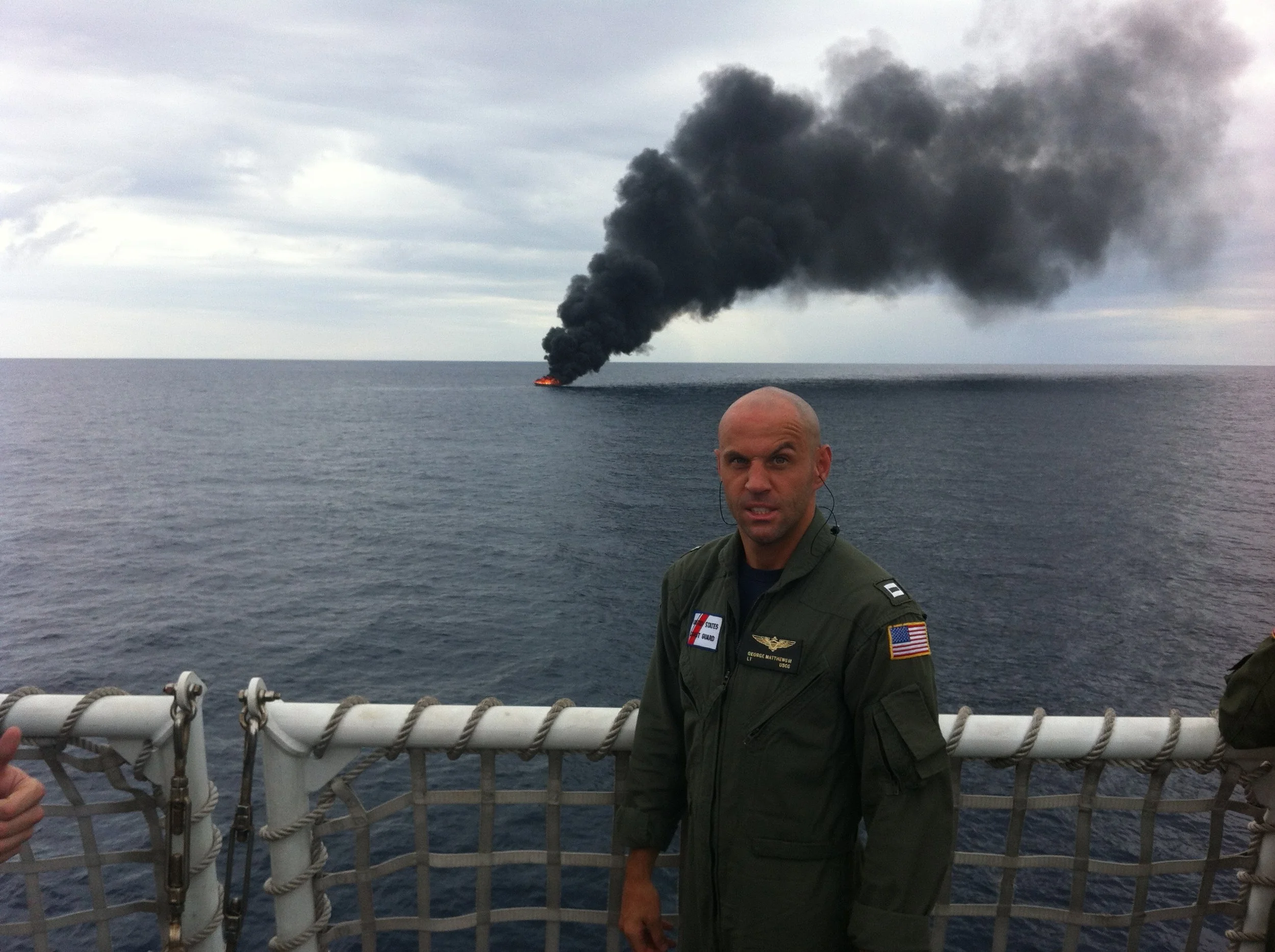
The basic HITRON mission is to deploy on the back of Coast Guard ships and patrol drug trafficking routes in international waters. We are part of a joint operation to detect drug smuggling vessels leaving their countries of origin. These vessels can be loaded with thousands of kilograms of drugs and are designed to go fast in the water, outrunning any surface assets. They often hide during the day and run at night to avoid detection. Once a vessel is detected, our helicopter takes off from a ship and intercepts the drug smuggling vessel. We then warn the vessel that they are breaking the law and proceed to fire extremely precise ordnance into their engines, without harming anyone on board, to disable the vessel. Once the vessel is disabled, surface assets from the cutter will come alongside, seize the drugs, and take the traffickers into custody.
I need to qualify as a Mission Copilot before my first deployment, which requires a full syllabus of tactical scenarios. I am immediately surprised by how aggressive the flying is on my first flight. We have a precision marksman manning inert weapons and hanging out the cabin door as we chase a highly maneuverable simulated drug smuggling vessel. The pilot demonstrating the maneuvers is flying to the absolute capability of the aircraft in a very dynamic environment low over the water.
The biggest difference is that in search and rescue, the people you’re rescuing are on your side. They want to help you because it’s in their best interest. You can control a lot about how the rescue is going to go. Drug cartels do not want to help HITRON, and they do everything they can to evade us. It is a huge paradigm shift. We have to learn how to hide in the darkness, avoid detection, and engage with a worthy adversary.
After I complete all my flights and upgrade as Mission Copilot, I am scheduled for my first deployment and paired with one of the best pilots at the unit. Once the crew is identified, we do several flights together, practicing the maneuvers to fine tune our tactics. We add more complexity when we embark on the ship by adding shipboard operations, small boats, and boarding teams to the training to ensure all of us are ready to deploy and perform this dangerous mission, where there is little room for error.
At the completion of all the training, we are given a couple of days at home before departing. The days before deployment are hard because I want to enjoy our time together, but the idea of doing a scary mission and being away for several months with only occasional email access casts an ominous light on our last few days. I’m used to being away on duty or other short trips, but never this far away and with such limited communication. I feel awful about having to leave, and I hate myself for putting Natalie through it.
When the morning finally arrives and I have to depart, it’s terrible. She drops me off at the squadron in tears, trying to look brave. I pretend to act tough while I walk away, but I can’t stop thinking, What if that’s the last time I see her? No part of me wants to leave her like that, but I have no choice.
Walking up to the hangar, I do what I’ve done so many times and bury all the fear and feelings because I know my crew is depending on me.
We head downrange into the wide open ocean. The first weeks are quiet. We have one interdiction, but for the most part, we do a lot of training to stay sharp. We are in a constant state of readiness. There is no time off the clock. Every moment we are on the ship, we are ready to launch at a moment’s notice to go head to head with the drug cartels.
I am fast asleep in my rack one night when the alarm blares through the 1MC. I climb out of my rack as the ship pipes the go fast bill, and we run into the combat information center, CIC. It’s just after 0200, and we brief with the ship’s command, the small boat crews, landing signal officers, and our crew before we all man our stations and launch.
I thought it would be hard to top the excitement of a search and rescue launch, but that’s a crew of four running out to the helicopter to do a mission. I quickly realize that a ship with over a hundred people all coming alive and excited to take a swing at the cartels is like nothing I could have ever imagined. Boarding teams are going to the armory, putting on their tactical gear and body armor, and grabbing guns and ammunition. Our precision marksman is running to the helicopter to load up with weapons and ammunition as we don our body armor, all under the eerie red lights of the ship.
As I load my firearm, aiming off the side of the flight deck, there is just the right amount of fear as I stare out into an abyss of darkness. It looks as if the ship is floating in outer space. This all feels like a scene out of a movie, and I am excited. This is exactly what I wanted, the excitement of coming together as a team to accomplish a mission, but now without the pressure of looking for loved ones I may never find. Although the risk is probably higher, the stakes are lower.
We launch off the ship into complete darkness, seeing only a grainy, sparkling green image through our night vision goggles as they strain to amplify the small amounts of ambient light. Unless someone has been out over the open ocean at night, it is impossible to describe the darkness.
It is unsettling.
We get vectored toward the go fast vessel, nearly invisible except for the faint wake that we can pick up on goggles. As we gather intelligence, the precision marksman swings his rifles out the cabin door and readies the cabin. We pass all of the information about the drug smuggling vessel over the radio and get permission to execute the mission.
At HITRON, we go to great lengths to ensure we do not harm the occupants of the drug smuggling vessels. It is not our mission to harm other people. We have many protocols in place to minimize the risk to personnel. Our precision marksmen are highly trained and use high caliber rifles to deliver devastating firepower to the boat’s engines without damaging the rest of the boat or their crew. Delivering that level of precision at 0300, in complete darkness, to shoot at an engine maneuvering erratically in the water from a moving helicopter is extremely difficult. It takes constant communication between the precision marksman and the pilot and requires the helicopter to be dangerously close to the water and the drug smuggling vessel to allow the precision marksman an opportunity to take a shot.
I am low over the water and aggressively maneuvering the helicopter to stay in position with the drug smuggling vessel desperately trying to evade us. My night vision goggles are straining to pick up the boat, and beyond the boat, I can see nothing but a dark abyss and a barely visible horizon in the distance. We complete the required warnings and legal procedures, and eventually we are cleared to disable the vessel. My entire focus narrows to the boat and giving the precision marksman a shot. Just as I am about to give him the call to “commence fire,” something operationally sensitive happens, and my night vision goggles completely malfunction and are rendered useless. I am extremely low to the water, at high speed, and blind.
I tell the other pilot, “I can’t see. You have the flight controls,” and let go of the controls.
I am sure I am going to crash into the water. Time slows down, and at this moment, all I can think of is Natalie. The only thought I have during what I think could be my last moment is, Natalie is going to be so upset that we never got married.
Luckily, the other pilot takes the flight controls and gets us straight and level and safely away from the water. A few moments later, my goggles are working again, and we continue the mission. I am in a fight, and even though I thought I was about to die, I somehow get right back to the boat. I regain my position with the gunner on target, and just as we are about to disable the vessel, they stop and put their hands in the air. We stay overhead and provide cover for our approaching boarding team.
We land back on the ship, and the adrenaline wears off. I’m exhausted, and all I can think about is Natalie. For so long, I had told myself I would never get married. I told myself I was afraid of the commitment. I had reasons, and I had some excuses, but that night, low over the water, thinking I might crash, put everything into perspective. If I lost my life in that moment, my only regret would have been not marrying Natalie.