Prove Someone Right
2005-2006
The Commandant of Cadets’ words continually play over in my head. “Your behavior is atrocious, and your consistent poor choices ensure me you will never be a successful officer.” What does he know? How dare he doubt me like that? I want to blame him. I am looking for anyone to blame for my situation, but eventually, I realize there’s nobody to blame but me. He’s right. My current trajectory is not going to result in me being a successful officer, and definitely not a pilot.
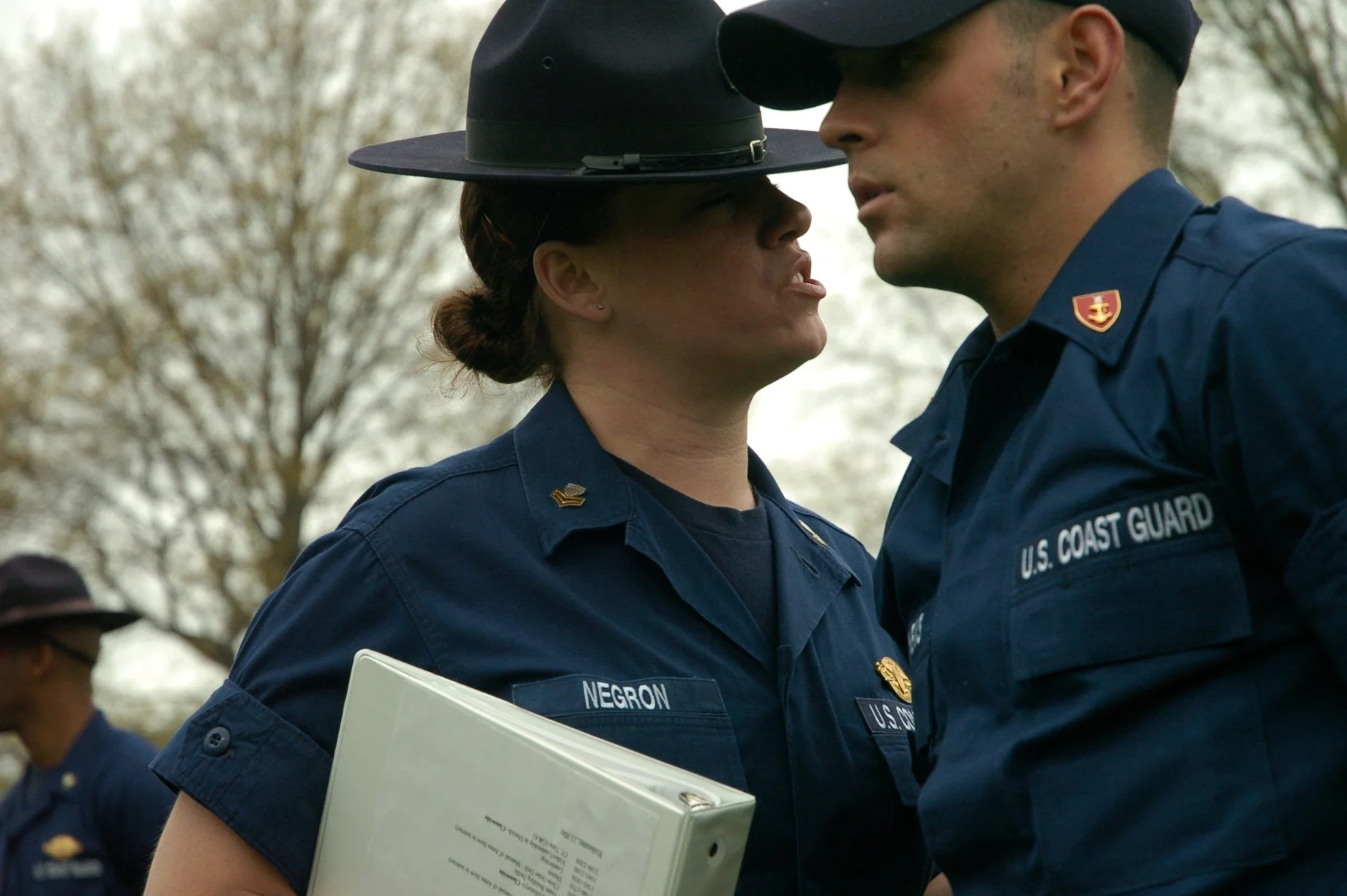
I don’t have much time to dwell on my most recent failure because the week after my mast, I am scheduled to be Swab Summer cadre for three weeks. Earlier in the summer, we went through cadre indoc week, where the boot camp drill instructors from Cape May, New Jersey, trained us on how to be cadre.
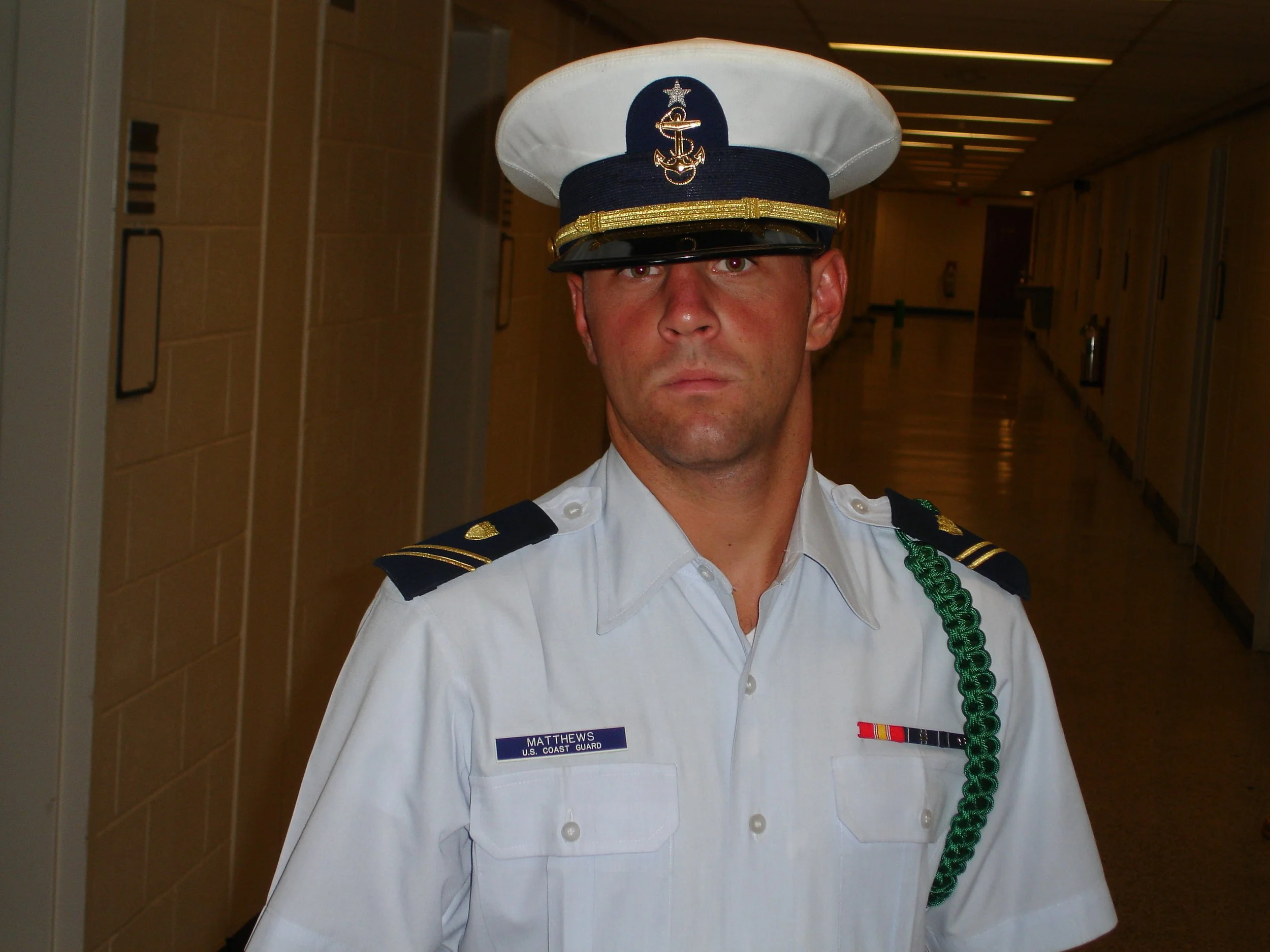
I spend a lot of time preparing my uniform and rehearsing how I will introduce myself to the swabs. The swabs reported three weeks ago, but at the halfway point, we show up as a second barrage to shake things up. The other cadre and I stand at one end of the passageway, trying to look as intimidating as possible. The swabs are all lined up along the bulkhead, standing at attention. Starting with the platoon commander, we all introduce ourselves. I march out, trying to look as fierce as possible.
“I am Second Class Matthews. I am not here to scream at you or punish you. I am here to train you and to earn your respect.”
I look out at all of them, and I know exactly how they feel. I know what it’s like to stand there believing you don’t belong. I know what it’s like to feel alone and scared. I know what it’s like to want to quit. As I look out at the swabs in the Class of 2009, I know I don’t want anyone to feel the way I felt. I become the cadre I needed when I was struggling through my darkest days.
I am immediately surprised by how much I love being cadre. It is an incredible thing to watch some of the best high schoolers in the nation transform into military cadets in just a few short weeks. I do all of the PT with them and push them past their limits. I watch them accomplish things they didn’t think were possible. I yell and scream and hold them accountable when they don’t meet the standards, but I also tell them I am proud of them when they overcome obstacles. I believe in them. I encourage them. I push them to give their absolute best.
What I never could have expected is that by asking the best of them, they finally bring out the best in me.
At the end of Swab Summer, my performance as a cadre is formally evaluated by my supervisors. My peers and the swabs I led also provide feedback through various surveys. The Company Officer wants to meet with me to discuss my performance, and I am prepared for a lecture and my usual abysmal performance evaluation. To my surprise, the swabs and my peers rate me higher than any other cadre. I receive only positive feedback, and the Company Officer tells me how impressed he is. I am shocked, and for the first time at the Academy, I feel proud.
The momentum from Swab Summer carries into the school year, and then, in late August 2005, the Coast Guard gains worldwide attention during Hurricane Katrina. During one of the most devastating disasters in the history of the United States, the Coast Guard shines while saving more than 33,000 lives. I watch in awe as helicopter crews pull people from rooftops, and I am enthralled by all the stories of heroism. It serves as a strong reminder of why I joined the Coast Guard, and it fuels me through the school year. My grades slowly climb to my highest GPAs yet: a still-mediocre 2.91 and 2.95. I also lay low and stay out of trouble, avoiding alcohol until April, when I finally turn 21 and have less chance of getting myself kicked out.
For my summer going into first-class year, my dream sheet is filled with all of the aviation internships and nothing else. Since I am still at the bottom of the class, I get orders to be Eagle cadre. It is probably the farthest thing from aviation. To add insult to injury, I am told I will get the job on Eagle that nobody wants: Food Service Officer. I will spend my summer on Eagle, leading the mess cooks and scullery detail. The only positive news is that as a first-class Eagle cadre, I will be instructing the Class of 2009 again, the same class that I led as swabs. I already have a close connection with many of them and have loved seeing them grow, so I am excited to spend some more time with them out at sea.
Within the first few days, someone has a mishap while cutting vegetables in rough seas, so it is decided that only the trained Culinary Specialists and cadre can handle knives. I spend a great deal of my time cutting vegetables underway. I also become a bit of a dishwashing specialist and spend hours in the scullery, which is basically a steam room, washing hundreds of dishes every day. I work alongside the third-class cadets and become even closer with their class.
I also learn how to sail a tall ship and get to climb the rigging to see the most beautiful views of the Atlantic. Even though NOBODY wanted to be Eagle cadre, we have incredible experiences. We are positioned as the starting line for the Volvo Ocean Race for the leg leaving New York City. We are the backdrop for the Coast Guard Commandant’s change of command in Washington, D.C.
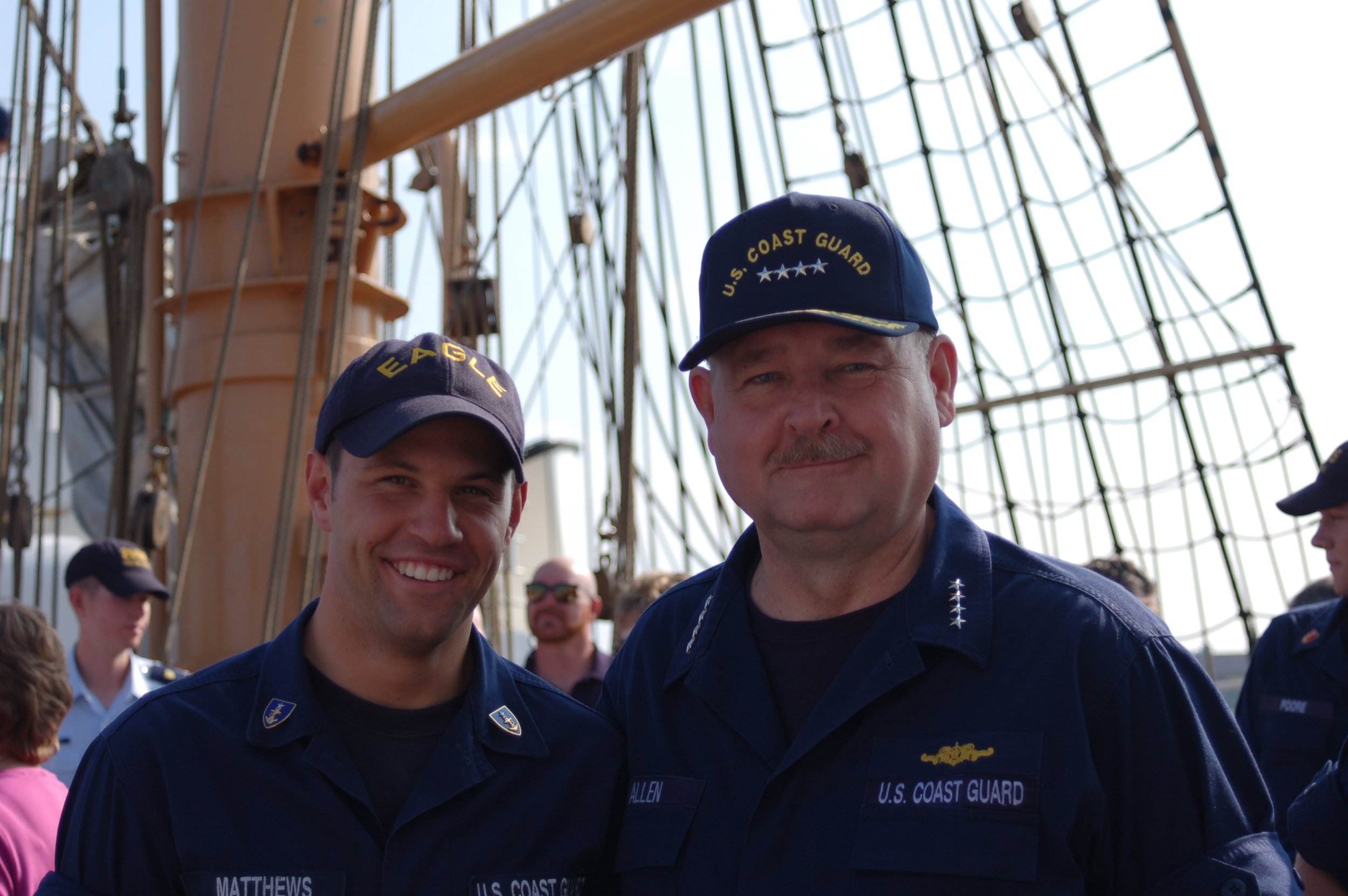
I meet Admiral Thad Allen, who directed the response to Hurricane Katrina and became Commandant on May 25, 2006. He is revered by the entire Coast Guard for his operational leadership and no-nonsense attitude. After his change of command, there is a reception on board Eagle, and despite being the most important man in the Coast Guard, he spends a little while talking to me. He tells me how he graduated dead last in his class and almost got kicked out for a conduct offense. His words are exactly what I need to hear. I imagine that when Admiral Allen was swirling the drain of his Academy class, it probably looked like he might also never be a successful officer. Now he is the Commandant. His story gives me hope and makes my failures feel a lot less permanent.
After the Change of Command, we sail to Puerto Rico, Bermuda, and Miami. Eventually we finish our 12 weeks at sea by pulling into Newport, Rhode Island, where my family and friends are waiting for me at the pier.
I return for my first-class year, and things are finally starting to look up. I haven’t been in trouble in a while, and I manage to climb all the way up to a 3.39, making it onto the Dean’s List. Despite this upward trajectory, I was in such a hole at the beginning of my Academy time that my meteoric rise only has me about 20 from the bottom of the class. Watching the Classes of 2004 through 2006, they have only selected five to ten people for flight school, all from the very top of the class. My chances are not great.
At the end of first semester, something interesting happens. Nobody really wants to be the Company Commander for my company. Half-joking, I mention that I should put in for Company Commander, and strangely, it gains momentum as many of my classmates in my company support the idea. Everyone comes together and decides that I should be the only one who requests it because Academy leadership would want any option other than me. My name gets brought to the Company Officer, and I am even more surprised when he says it’s a fantastic recommendation. My Company Officer saw my performance during Swab Summer, was one of the officers who spent his summer on Eagle with me, and we have developed a strong relationship. He saw leadership potential in me long before I saw it in myself, and he has been there watching me fight to do better. The only problem is that the Company Officer has to brief his selections to the Commandant of Cadets for approval. Luckily for me, the Assistant Commandant of Cadets and Commandant of Cadets who both tried to remove me from the Academy have transferred, but it will still be a tough sell to the new regime given my record.
After a few days, I get word from my Company Officer that I have been approved to lead Alfa Company second semester until graduation. My Company Officer tells me there were a lot of questions and a long discussion about why I should be Company Commander, but he assured them I would do a great job. He believes in me, and I am not sure if I am ready for the responsibility, but I will do whatever it takes to make him proud.
I have spent so long fighting to prove everyone wrong. Now I have to prove someone right.