GAINS
2015-2016
Natalie and I spend our honeymoon in Costa Rica, staying in the rainforest near a waterfall. It's the most relaxing and beautiful week I have ever had, but then I return to a rude awakening. Less than a month after our honeymoon, I'm scheduled to deploy again, and the preparations begin as soon as I report back to HITRON. It feels like being jolted awake from the most peaceful dream.
It hurts.
This is my first deployment as a Mission Commander, the senior pilot responsible for the mission. I have also recently been upgraded to instructor pilot and have quite a bit of impostor syndrome. I spent so much time in flight school failing and wondering if I’d ever be a pilot, and now I am being trusted to teach new pilots how to execute airborne use of force missions and stay safe out in the middle of the ocean. I was surprised when the other instructors asked me to enter the syllabus to become an instructor pilot. I still feel too new, like I need to prove myself.
Things move fast.
We form up as a crew for this next deployment and complete all the required flights to prepare. As our departure date gets closer, I become more and more nervous. I am putting a tremendous amount of pressure on myself as the Mission Commander. I want everything to go right. I want the AVDET and the cutter crew to think I am a good pilot and leader.
The night before I am supposed to leave, I can't sleep. I can't stop thinking about my in-brief with the cutter. I'm rehearsing my speech in my head. I'm reviewing deployment checklists and feeling like I'm forgetting something. I'm considering every possible tactical scenario. I am scared.
I am 30 years old, and they are trusting me to lead a crew of six and operate a multimillion dollar aircraft filled with high caliber weapons from a ship, in and out of foreign countries, against drug cartels. This seems crazy, and I don't feel ready.
After a sleepless night, I say goodbye to Natalie as she cries her eyes out, and I embark on the cutter.
The first thing we do is the in-brief, and it goes a whole lot better than when Kenny got verbally assaulted during his. The crew is extremely welcoming, and the leadership goes out of their way to make us feel like part of the team.
The deployment is busy and exciting.
We have to medically evacuate someone who needs emergency surgery and fly them into a foreign country for care.
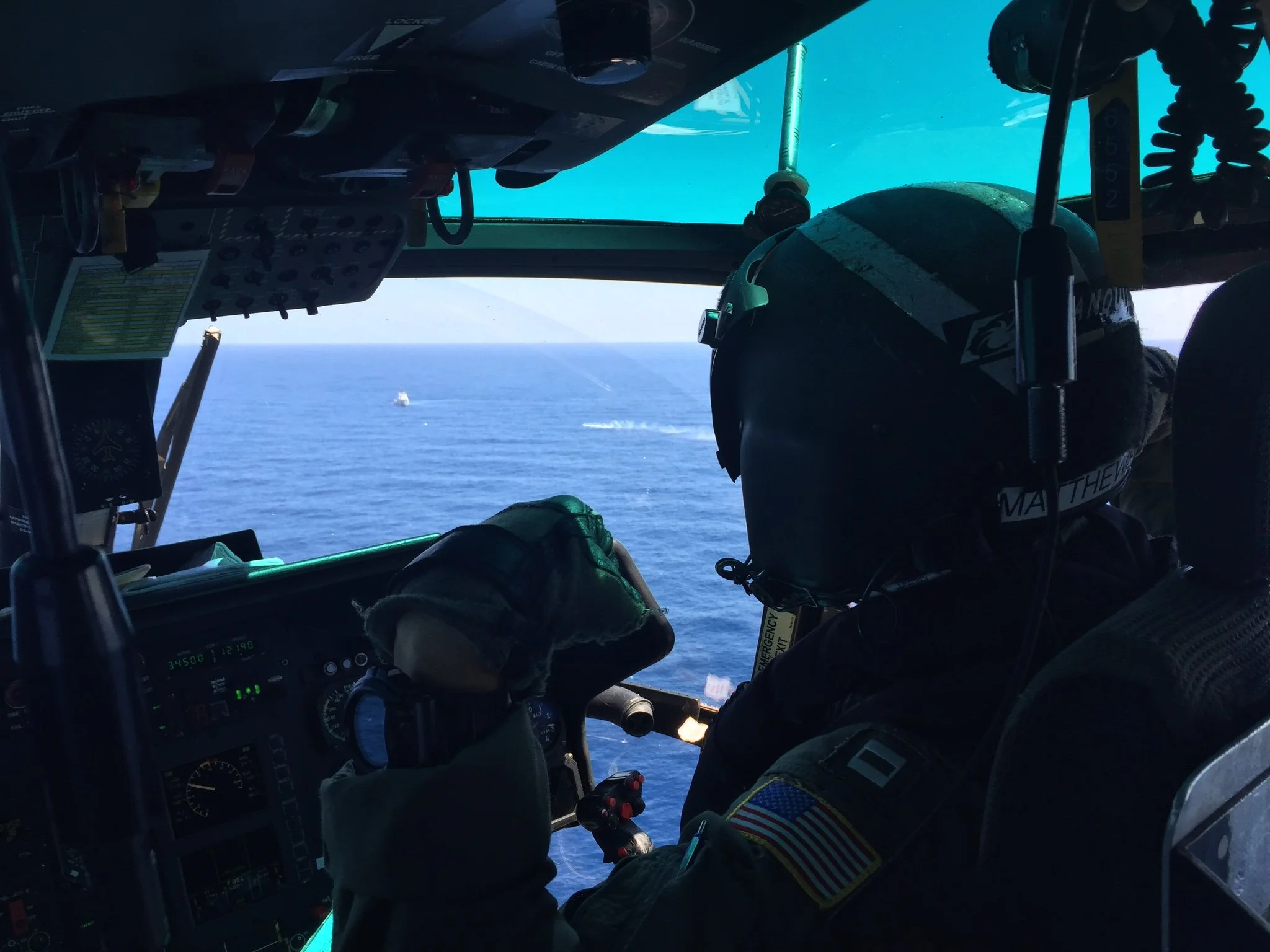
On one of our takeoffs from the boat, we immediately have a failure of one of our embedded GPS units and lose some aircraft stabilization components that are required for landing on the ship. My adrenaline quickly spikes as we maintain control of the aircraft and perform the steps of the required emergency procedure. Once we are stable, we check the map and determine we can barely make it to the nearest country. We only have a couple of minutes to decide, and we determine it's safer to fly into a foreign country without approval than to force a landing on the boat with a degraded aircraft.
We let the boat know our plan and turn toward land. The flight takes over an hour, and luckily, we have good radio communications, so we are able to have some people in high places make some quick calls and clear us to enter the country.
Once we land and shut down, we restart all the systems, and everything works as normal. Sometimes we just need to turn it off and back on. The hard part is getting the aircraft released by the maintenance team back home, and we spend most of the day wandering around the airport terminal in sweaty flight suits.
All of these flights are challenging and require some tough decision making, but my training has prepared me for them.
What I am not prepared for is pulling into port. My crew has a few wild children who apparently need to blow off some steam on deployment. They seem to be hell bent on getting me fired. I am constantly chasing them around and trying to keep them out of trouble.
Normally, when I pull into port, I call Natalie, try to find some good food, and have a nice, relaxing break from deployment. I am in bed early and leave port recovered.
This is not the case with this crew. I am out late trying to find missing people who have either gotten into altercations or been thrown out of various establishments. It is a nightmare.
One evening, as I am climbing into bed, one of the chiefs from the boat finds me and says I need to go and rescue one of my crew. Allegedly, he was being belligerent on the bus, got kicked off, and was last seen wandering around aimlessly. I get dressed, run off the ship, and head to my crew member's last known position. Nobody is there. I have to wander around the city all night asking everyone from the boat if they have seen my drunkard. I am convinced I am getting fired.
Eventually, I learn he is staying in a hotel, find his room, and knock on the door. A door opens next door, and it's the hotel room neighbor, who screams at me about how my aircrew member was raising hell the night before. I apologize and explain the situation.
I knock a few more times with no response. Luckily, it is a first floor room, so I walk around back and knock on the window. Still nothing, but I can peek through the blinds and see my guy fast asleep on top of the bed, as happy as can be, with the lights and all his clothes still on.
I spend the long walk back to the boat wondering how I am going to handle this in the morning, and I can't help but think I deserve this after so many years of my own drunken escapades.
After a terrible night's sleep, I sit down with my very hungover troublemaker. I calmly tell him, “I was really worried about you last night. One of the chiefs told me about what happened, and I had to get out of bed and spend hours looking for you.”
I then explain the operational impacts of his actions and how we would have been in trouble if the boat had to leave in a hurry and I couldn't even get him out of bed.
Then I share my own story with drinking. I explain how I was just like him and would get wild any chance I could. I tell him how I worried about losing the respect of my crew and potentially throwing everything away by making a stupid mistake. I know there is no way I can lecture a grown man about drinking, knowing my own past, but I can share the lessons I've learned.
At the end, I ask him, “What do you think I should do?”
He says he'd probably restrict himself to the boat for the day, our last day in port, and impose curfews and drinking limits during the next port calls.
I go with his suggestion.
I also tell him that I consider this incident handled. If he keeps his nose clean for the rest of the deployment, I'll assume he has learned his lesson and won't make it a big issue when we get home. He seems to understand.
Nothing could have prepared me for this. I thought I just needed to keep everyone safe in the aircraft. I never would have thought I'd need to save them from themselves in port. Luckily, everyone behaves for the rest of the deployment, but it is the only deployment where I can't wait to get back underway after every port call.
After arriving back home, time flies by, and it's already time to submit my dream sheet for my next unit. I put down only operational search and rescue units because I feel ready to get back to SAR. Before I know it, it's time to depart on my last HITRON deployment.
I am stressed again leading up to the deployment, but not nearly as nervous as I was before my last one because I am starting to feel like I know what I'm doing. The only thing that doesn't get any easier is saying goodbye to Natalie, and I still feel awful anytime I leave her. This last deployment has the potential to be my best one yet. My AVDET crew is great, and all the interactions we have had with the boat so far have been positive.
As soon as we embark on the ship, we have a maintenance issue with the aircraft on the first landing. We shut down, and my first conversation with the Commanding Officer is to tell him that we're already broken and I need to fly off the boat to fix the helicopter, delaying the deployment. I think he can tell I am stressed, but he is entirely unbothered and says, “This is no problem, George. We are all here to support you and are just happy that you'll be on this deployment with us. Whatever you need to do, just let me know how we can help. I trust you completely with whatever decisions you need to make.”
I can tell this is going to be a great deployment.
We fly back home, and I surprise Natalie that night. I love having one more night with her, but the only problem is that now I need to say goodbye to her again, and it is even more painful the second time.
The next day, our helicopter is fixed, and we head back to the ship. We immediately notice that morale on this ship is high, and the crew seems excited to be underway doing this mission. This boat has had several HITRON deployments and is very experienced with interdictions. Every drill we do with them makes it clear that they are tactically sound.
Something strange also happens with my AVDET on this deployment.
After breaking my finger doing jiu-jitsu, I decided it was time to retire from the sport. Having been constantly berated about my vegan diet and told I would lose any muscle I had, I decided I wanted a challenge and would start bodybuilding. I've hired a coach and have a bodybuilding show lined up for a couple of weeks after the deployment returns. My coach has me doing grueling workouts modified for the back of a ship, and I am meticulously tracking the food I brought on board.
I expect this to be a solo endeavor until my gunner, Matt Huey, approaches me on the first day. He tells me that he wants to get in shape and make some changes to his health.
I don't think he's serious, and I doubt him. I've known Matt for a little while. He smokes, drinks, eats anything in sight, and doesn't really work out. I tell him I'll be out on the flight deck the next morning and would love to work out with him, fully expecting him not to show up.
The next morning, I wake up, head to the fantail, and am surprised to see Matt there. We work out together, and I coach him through all the movements. He is very curious and interested and makes a great workout partner, but I figure he will probably get sore and never show up again.
I'm wrong.
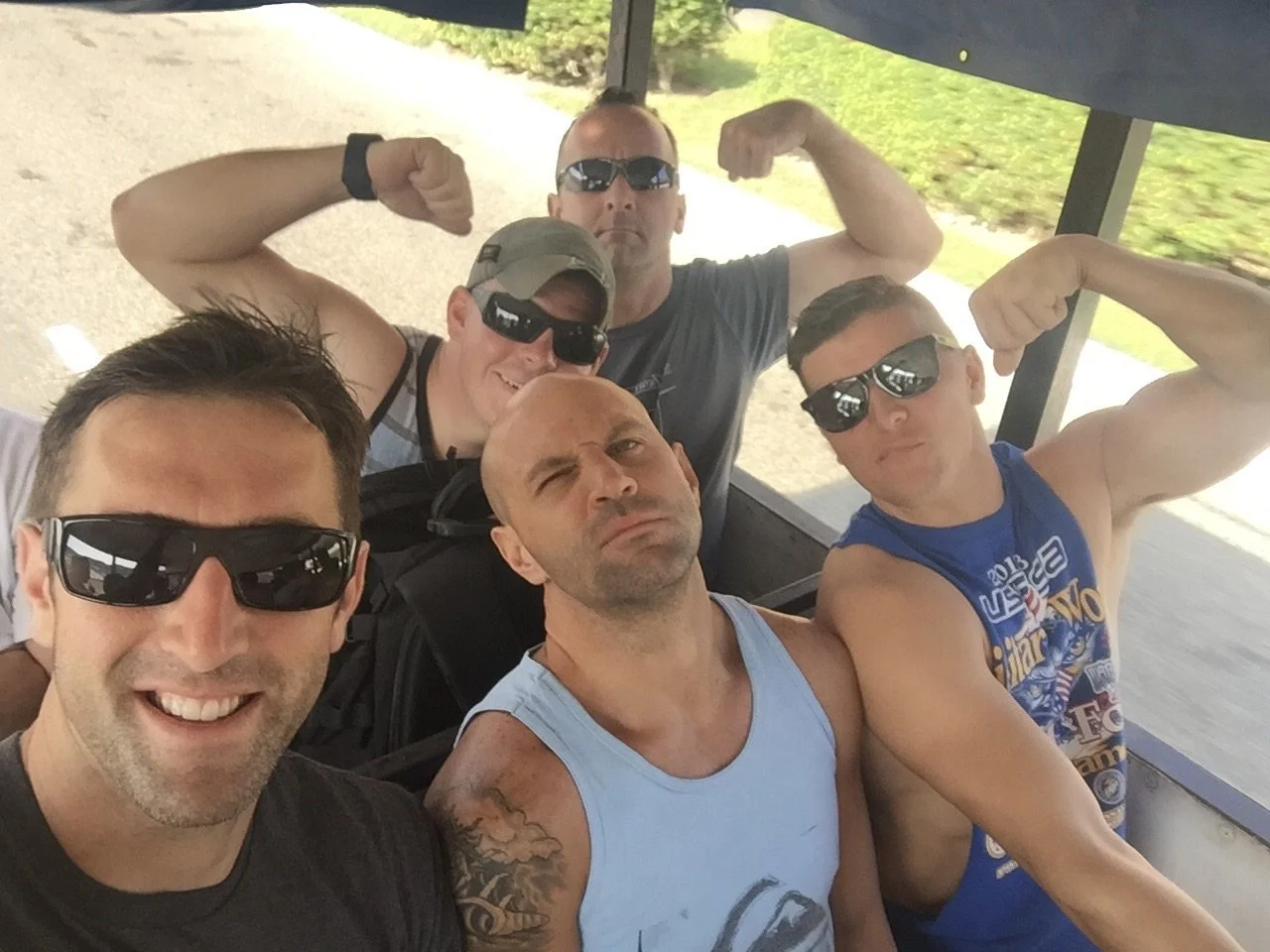
Matt keeps showing up, and he also brings someone with him. Jordan Gottfried, one of our mechanics, shows up. He's a natural athlete and, as one of the funniest people I know, provides plenty of comic relief. More and more of our AVDET show up, and soon almost our entire crew is working out together every day in the blazing heat on the fantail. Because of our affinity for fitness, we decide the tactical callsign for our helicopter will be “Gains.”
Our crew forms a strong bond through our daily suffering in the sanctuary of iron, and it's a good thing we do because, as soon as we get into the operating area, things get busy.
We are getting launched on interdiction after interdiction. As soon as we stop one boat, finish the processing, and begin patrolling again, we are after the next boat. On one flight, we even interdict two boats within minutes of each other.
“Gains” has fully integrated with the ship's crew, and under the amazing CO's leadership, we are a formidable fighting force. It is exciting, and morale is through the roof.
Every day consists of a great workout with the gang, and we are constantly getting launched to perform the mission. I am loving every minute of it.
Toward the end of the deployment, fatigue starts to become a factor. The boarding teams have been working nonstop, and it is a high operational tempo for everyone. The entire crew is full of hard workers, and most people would run through a wall for the CO, so we are all pushing through.
On our last night in the threat vector, we get intel on a drug smuggling vessel and launch into the darkness. I fly the interdiction, and it is fairly challenging, but as soon as we start heading back to the boat, I can feel the fatigue, so I swap controls with my copilot.
We call in to the ship, and they report that the cutter is pitching and rolling quite a bit, close to our limits for landing, but we are extremely proficient at this point and have been flying regularly in these conditions.
Everything seems normal on the approach, but it is dark, and the boat's movement is significant. As we get over the landing spot, the boat is moving a lot, and we are trying to stay in position.
After a few moments, we come down, but as we do, the 800 ton cutter is thrust up at us by the unforgiving ocean. We hit hard, and I get my bell rung as we plant it on the flight deck. I hear our own Emergency Locator Transmitter (ELT) beacon going off in our headsets. The force of the impact has activated the ELT, making it think we've crashed. Within seconds, our radios are going off because District has picked up the satellite signal and thinks we may be in the water.
We are supposed to fly off the next morning and start heading home, but I know this aircraft isn't going anywhere. We significantly damage the helicopter and have to ride the cutter back home as passengers.
It's a long, embarrassing trip.
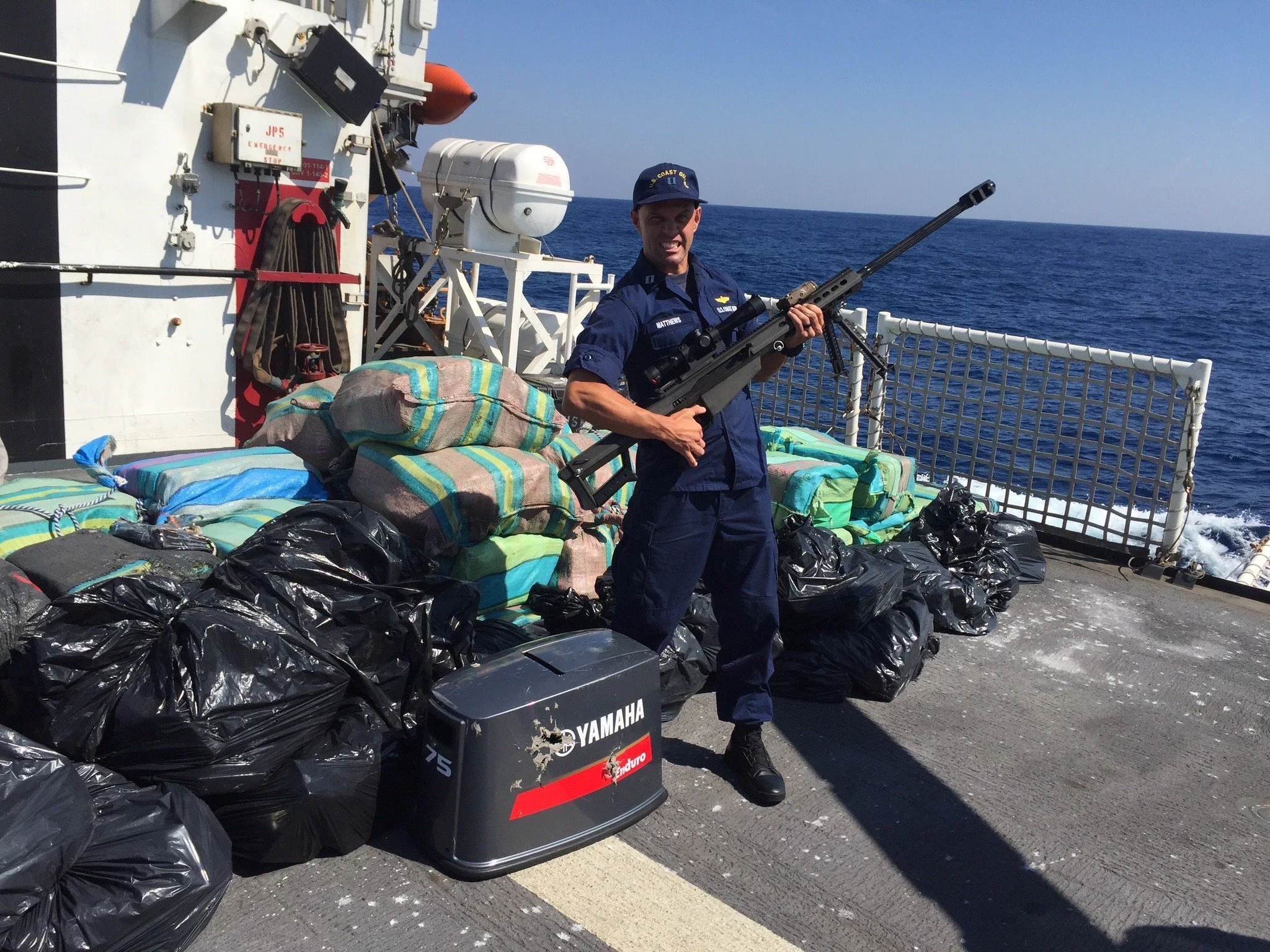
We end up tying the HITRON record for the most interdictions in a single deployment, stopping eight drug smuggling vessels and seizing 4.7 tons of cocaine worth over $141 million, but my last shipboard landing at HITRON was essentially a crash.
I learn a valuable lesson about aviation. I'm an instructor pilot now, I've been in command of two successful deployments, and I just tied a HITRON record. I was feeling myself a little bit, and then that flight deck smacked it right out of me. I learn that in this business, you have to prove yourself every single day. No matter how experienced you become or how much you have accomplished, you are always one mistake away from being humbled. Our hard landing cost quite a bit of money to fix and required many maintenance hours, but luckily, we walked away with only minor back injuries. Some mistakes are far more costly.
Even though our helicopter was broken and we couldn't fly, we all showed up on the flight deck and kept working out together. Matt didn't miss a day of training the entire deployment, and I continued training him long after we got back. I would later be stationed with Jordan again, and we would spend many hours together suffering in the gym. Those workouts on the fantail are some of my favorite memories from my tour at HITRON, memories I will never forget.
A few months after returning, it is again time to move on and begin my third flying tour. My time at HITRON was transformative. I became a husband. I upgraded to instructor pilot and was trusted by the command to lead deployments and perform a challenging, dangerous mission. I am proud of my five deployments and the interdiction of over 13,000 pounds of cocaine.
I came to HITRON because I wanted a break from the pain of search and rescue. I couldn't take any more sleepless nights looking for people who needed me and I rarely found. I needed to heal. HITRON gave me some time I needed to heal. It also gave me a new challenge and a tremendous amount of responsibility. It humbled me and made me a much better pilot and leader.
Now, I am finally ready to return to search and rescue and remember why I spent my whole life wanting to join the Coast Guard, to save lives.