Wings of Gold
January, 2010
Even though I am ecstatic about finishing primary, it is no time to celebrate because I still have a long journey ahead. I need to make it through advanced training and learn how to fly a helicopter.
I have some time off before there is an opening for me in advanced training, and unfortunately, I am met with a new obstacle. Because of the stress of the last few months and treating my body like a dumpster, my sinus problems have worsened, and I am continually on antibiotics for sinusitis. The flight surgeon recommends sinus surgery and tells me that I need to fix my condition or I will be medically disqualified for flight. I am frustrated because I finally figured out how to avoid failing out, but now I need to fight to stay medically qualified.
The surgery goes well, and they remove some problematic parts of my sinuses. I recover quickly from the surgery, but some of the headaches and sinus irritation remain. I am worried, but my surgeon recommends cleaning up my diet and removing some inflammatory foods. I think he is crazy, but I will try anything to stay in flight training. I start eating healthy, remove all dairy products, and commit to taking care of my body. Surprisingly, my sinus problems disappear almost overnight, and in July 2009, I start advanced flight training.
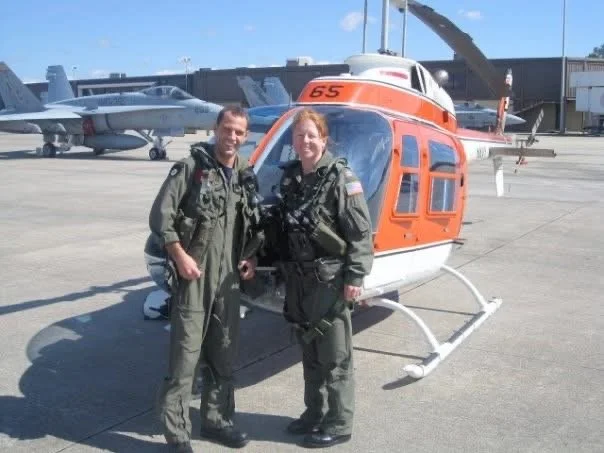
I am sitting next to my on-wing, and she is showing me how to hover the TH-57B. She barely manipulates the controls, and the helicopter is perfectly stable a few feet over the grass. She explains what she is doing, and it looks effortless. She spends some time moving the helicopter in each axis, and I am amazed at how maneuverable the helicopter is.
I don’t understand why she is spending so much time explaining everything. Keeping the aircraft in the same position can’t be hard, and I am ready to start.
We are at Spencer Field, an enormous one-mile-by-one-mile square practice area used by training aircraft. My on-wing has us situated in a corner and establishes a box nearly half a mile long. She explains that the objective is to maintain a hover in that box.
No problem.
As she hovers, she first gives me the rudder pedals and maintains the rest of the controls. I yaw the nose slightly left and right. She shows me how pulling more power with the collective causes the nose to yaw right.
Got it.
We hover this way for a few minutes, and I do a great job maintaining heading. Next, she gives me the collective, and I use my left hand to climb and descend. Now I am maintaining my heading and altitude, and it’s no problem. After a few more minutes, she asks if I am ready for the cyclic and to have all flight controls.
Can’t she see how great I am doing with the pedals and collective? Obviously, I’m ready. I can’t believe she has given me a half-mile square area just to hover.
She gives me the cyclic, and I am hovering a helicopter for the first time. It feels incredible, and I realize I am living my childhood dream of being a helicopter pilot.
I am immediately snapped out of my nostalgia as all hell breaks loose.
My stable hover somehow turns into a 15-knot forward air taxi, and the tree line that was a quarter mile in front of me is rapidly approaching. I watch my on-wing out of the corner of my eye, and she is entirely unbothered. I wonder if she realizes how little control I have as we are careening toward the forest.
I pull back hard on the cyclic to avoid weed-whacking the trees with our rotor blades and accidentally initiate a steep climb. I arrest the forward drift, but with the collective setting, I am climbing well above the assigned hover altitude. I lower the collective to correct my altitude, and the nose yaws right. I can only correct one problem at a time, and my hover feels like a bull ride.
I am using every bit of the half-mile box, and I am unable to regain anything close to a stable hover at any point. My on-wing calmly provides me some tips.
“Look out at the horizon and make smaller corrections.”
I try my best to do what she says, but nothing seems to help. Eventually, she takes the flight controls back, and all motion stops as if the helicopter has had an exorcism. She tells me that I did fine and that nobody can ever keep the helicopter in the box on their first flight.
Even though hovering seems impossible, I enjoy every minute of my first helicopter flight.
My on-wing is incredibly smart and demands perfection on briefs and procedural knowledge. She loves instructing and explains that her high standards will ensure my success through advanced training. She is right.
I wouldn’t go so far as to say I breeze through advanced training, but helicopters make much more sense to me than planes. My study habits and work ethic are paying off, and I start to believe in myself again. A few months later, on January 5, 2010, I complete my last training flight. The instructor and I celebrate with a beer, and it is the best beer I have ever tasted.
Duby, me, Guido.
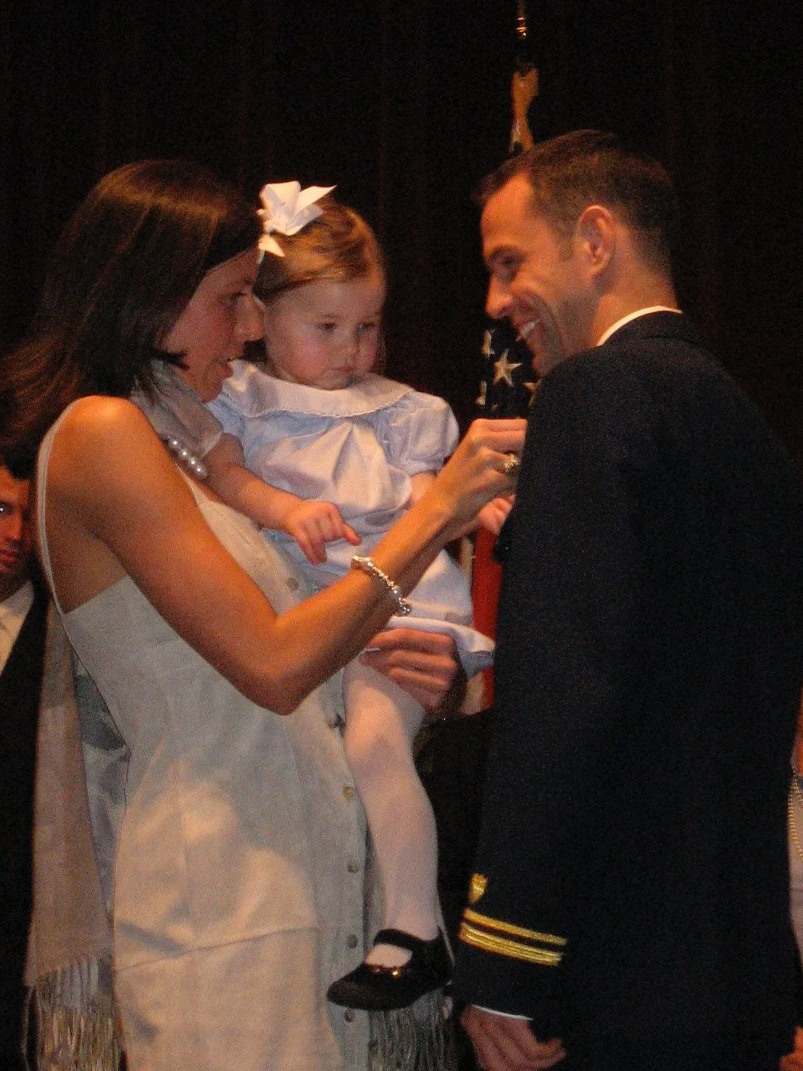
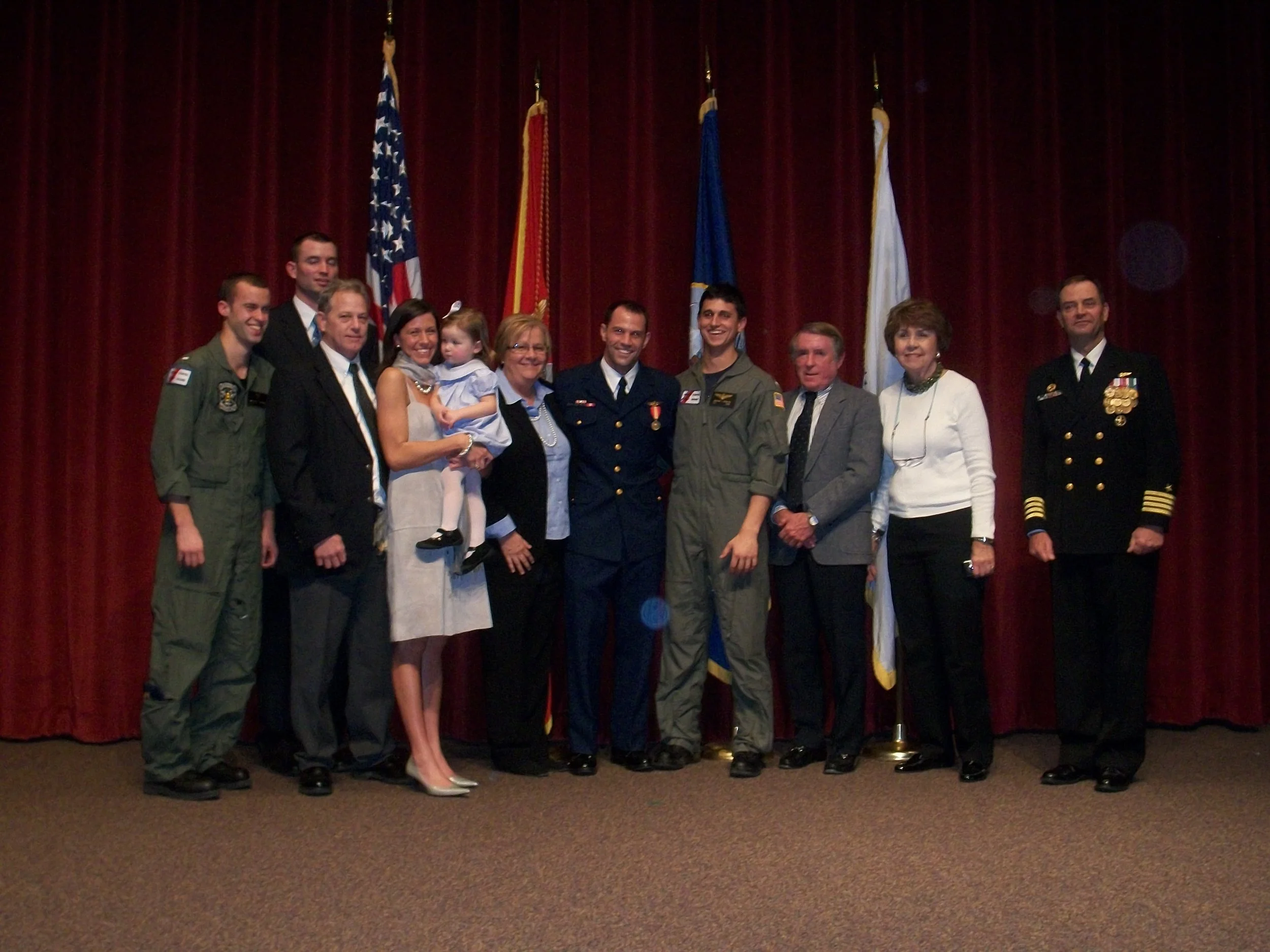
My winging ceremony is a few weeks later, and on January 15, 2010, I earn my “Wings of Gold.” I stand on stage in my dress uniform with my family and best friends, Duby and Anthony. My sister and young niece pin my wings on my chest.
These same wings that were given to me by one of the legendary instructor pilots in Mobile. The wings I spent months staring at and hoping I would one day earn. The wings I have dreamt about my entire life.
Today, with some of the people who believed in me the most by my side, I finally earn those wings, and I swell with pride. Few people know what it took for me to get to this moment. I endured many failures, quit, lost hope, hit the bottom, and fought all the way back. Against all odds, I made it from a boy with an impossible dream to a winged aviator.
After the winging, we transition to a reception with our friends and families. We all have unique steins with our aviator number, wings, and aircraft on them, and we toast to our respective services. The Training Air Wing 5 Commodore, Col. John “Vapor” Walsh, delivers a speech to conclude the winging reception.
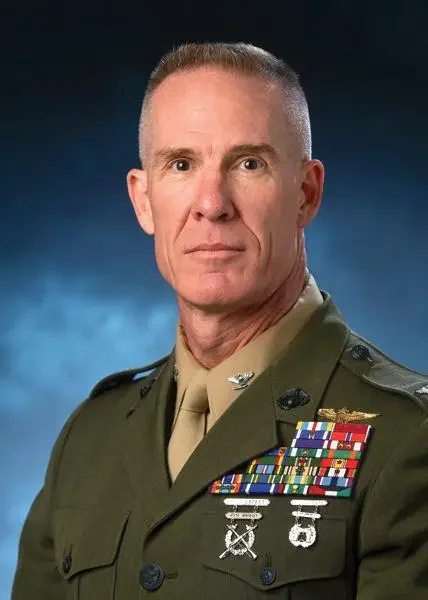
“Vapor” is a Marine Corps Harrier pilot. Imagine the young Marines on the recruiting posters, add 20 years of battle hardening and fighter jet flying, and you have “Vapor.”
“Vapor” is wearing an impeccable full-dress uniform. His entire chest is full of medals, and he has the highest high and tight I have ever seen. “Vapor” embodies everything that it means to be a military leader. He is a legendary war hero who flew in the Gulf War.
“Captain John S. Walsh, a VMA 542 pilot, had the closest of calls. While attacking an Iraqi armored column, his AV-8B was hit amidships by an infrared-guided SAM. At about 8,000 feet, the blast perforated the Harrier’s right wing and blew off the flap. It also set fire to the fuel in the right-wing tank, producing a trail of fire three times the length of his jet. Walsh was determined to get out of enemy territory, but the Harrier was coming apart around him. Realizing that the Ahmad al-Jaber Air Base in Kuwait had ostensibly fallen to Marines, he hoped to land there and save himself and his jet.
Once over al-Jaber, Walsh tried to lower the landing gear, but it would not come down. As he tried to decide the best place to eject from his jet, the controls froze up and the plane flipped on its back. Though flying at only 900 feet above ground, he ejected. The seat performed perfectly, getting him right-side up just before ground impact. The only human activity that Walsh saw from his location was a cloud of dust on the horizon that fortunately turned out to be a Marine patrol. He was rescued and found his way back to King Abdulaziz Air Base within a few days.” -Fred Allison, “The Desert War: Marine Corps Aviation in Desert Storm, January–February 1991,” Expeditions with MCUP, Marine Corps University Press, January 29, 2021, https://doi.org/10.36304/ExpwMCUP.2021.01
“Vapor” is captivating, and when he stands in front of all of us, the room immediately falls silent. He begins his speech by thanking everyone for their attendance and congratulating the pilots. Next, he addresses the parents. He explains how their sons and daughters in the Navy and Marine Corps will do incredible things while defending our great nation. As I listen, I am curious what a warrior like “Vapor” will say about the Coast Guard.
Then he starts.
“The Coast Guard parents should be extremely proud of their sons and daughters. In the not-so-distant future, someone will be out on the ocean and find themselves in an unfortunate situation. They might be out on a dark and stormy night when their boat sinks, and they find themselves in the water. They will be alone and fighting for survival. They will begin to hope for a miracle and pray to whatever they believe in. Your sons and daughters will answer those prayers and be that miracle. Just as that person in the water starts to lose hope, your sons and daughters will arrive in a helicopter and save their life.”
As he says these words, I can see how proud my parents are, and I imagine the people I may someday have a chance to save. All at once, I feel the weight of the gold wings on my chest. I feel a sense of accomplishment like I have never felt before, but it comes with an overwhelming responsibility for the lives that may someday be in my hands.