4239
MARCH 2010
After earning my wings, I have orders to report to Coast Guard Air Station Borinquen in Puerto Rico. Air Station Borinquen was first on my dream sheet coming out of flight school because I knew I wanted to fly the H-65 Dolphin and live in a tropical paradise.
Before I am qualified as a copilot and able to stand duty, I need to complete my transition course at ATC Mobile. As soon as I check in with the command, they ask if I can go to an earlier transition course and report to Mobile in just a few days. There is no way I can say no, so immediately after checking in, I am headed right back to Alabama.
The transition course is around six weeks, and its purpose is to take winged helicopter pilots trained by the Navy and teach us how to prosecute Coast Guard missions in the H-65. I am paired up with another newly winged pilot from Air Station Borinquen, Ryan Ramos. Ryan graduated from the Academy a year ahead of me, and we were at flight school at the same time. Ryan is an incredible person. He was the most popular person at the Academy and has the innate ability to make friends with anyone. He is always in a good mood, and just being around him makes everything more fun. I am extremely lucky that I get to have Ryan as my “stick buddy,” and I can’t wait to learn the Coast Guard way alongside him.
When we walk back into the Branch, I see LCDR Sanborn and most of the same legends who were there before. I am met with handshakes, hugs, and lots of excitement for making it through flight school. Ryan and I are welcomed into the H-65 community and excited to begin training.
Things are a lot different in the Coast Guard training environment. Coast Guard aviation is an extremely small and close-knit community, and your professional reputation follows you everywhere. The instructors in Mobile understand that even though they are there to train the fleet, they will also return to the fleet as duty-standing pilots. They preach teamwork and crew resource management, and instead of being treated like students, we are treated like we are already part of the team. The other difference is that I know how to study now and understand the kind of dedication it takes to be a professional pilot. Ryan and I study together, and we study hard. I admire these legendary instructors so much, and I want to impress them and make them proud.
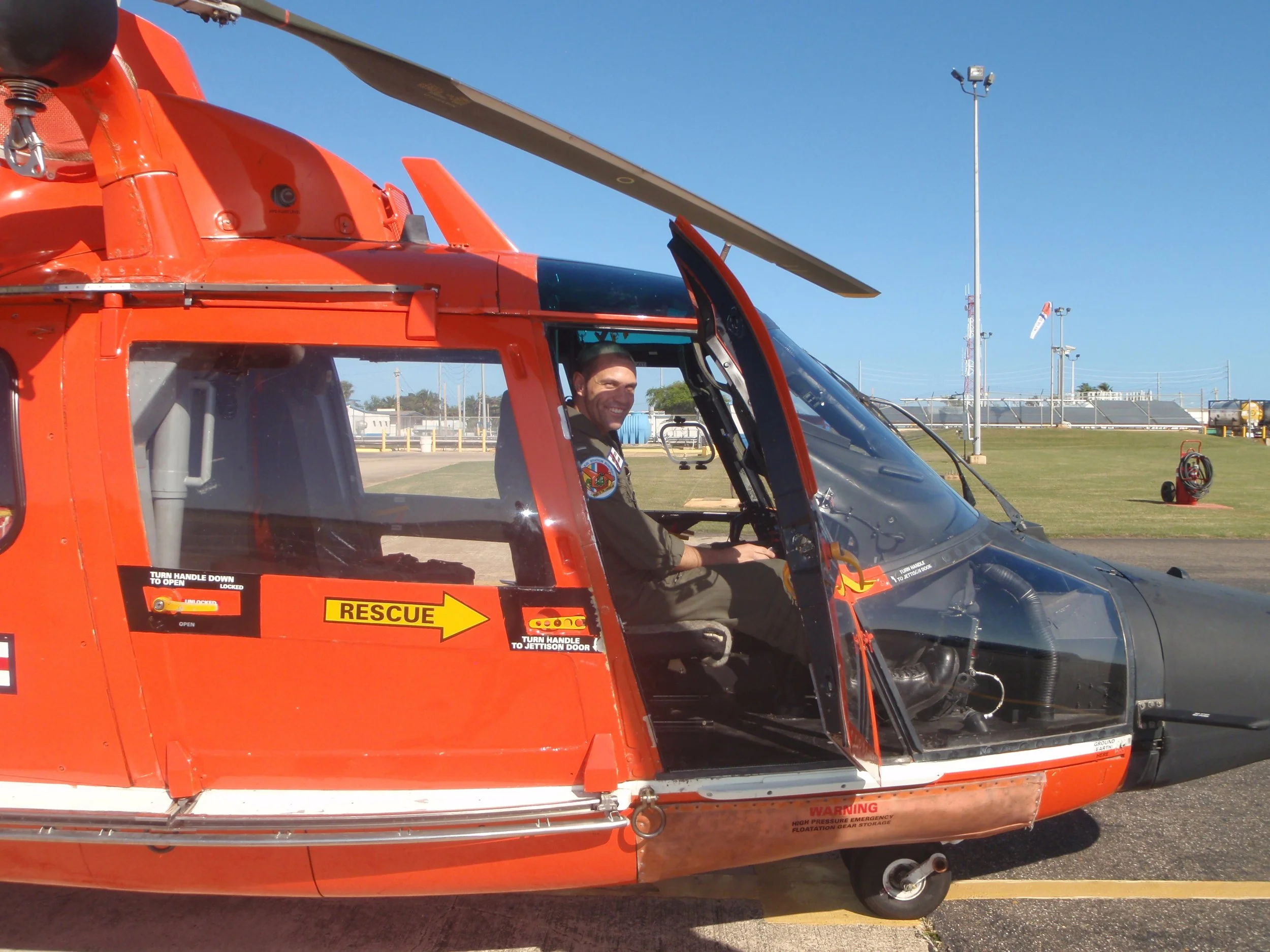
The H-65 Dolphin is originally a French-made aircraft, so for some reason, the main rotor head spins in the opposite direction of any helicopter made in the United States, including the TH-57 from flight school. Because of the difference in spin, some of the control inputs are reversed, so it is a little strange at first. It is also different because the H-65 is on wheels with landing gear struts, unlike our flight school aircraft, which had rigid skids. It feels soft and bouncy whenever I take off and land.
The syllabus at the transition course moves fast, and the standards are high. Ryan and I study together every day for hours, spend extra time in the simulators, and quiz each other on procedures. We are partnered up for all of the simulator events, and we work extremely well together as we combat a barrage of emergencies and bad weather.
On my second night flight, I have the opportunity to fly with LCDR Sanborn, and it is an impactful moment for me. It hits me that the first time I met LT Sanborn in Atlantic City, I was immature, struggling, and hoping for a dream that seemed so far out of reach. Now I am here with one of my role models, living that dream. It still doesn’t seem real, and I start to wonder if it will ever set in.
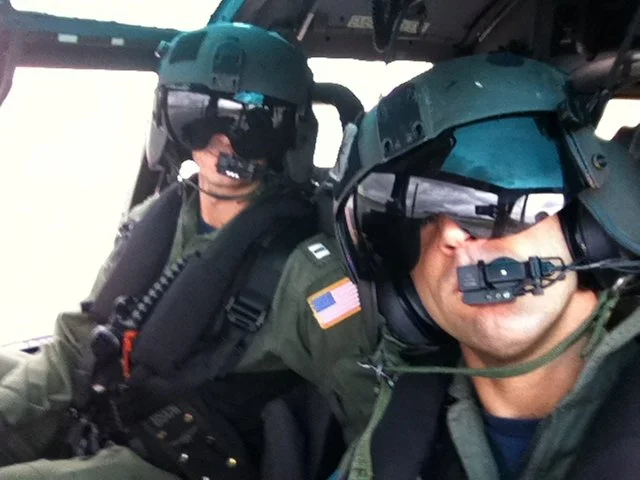
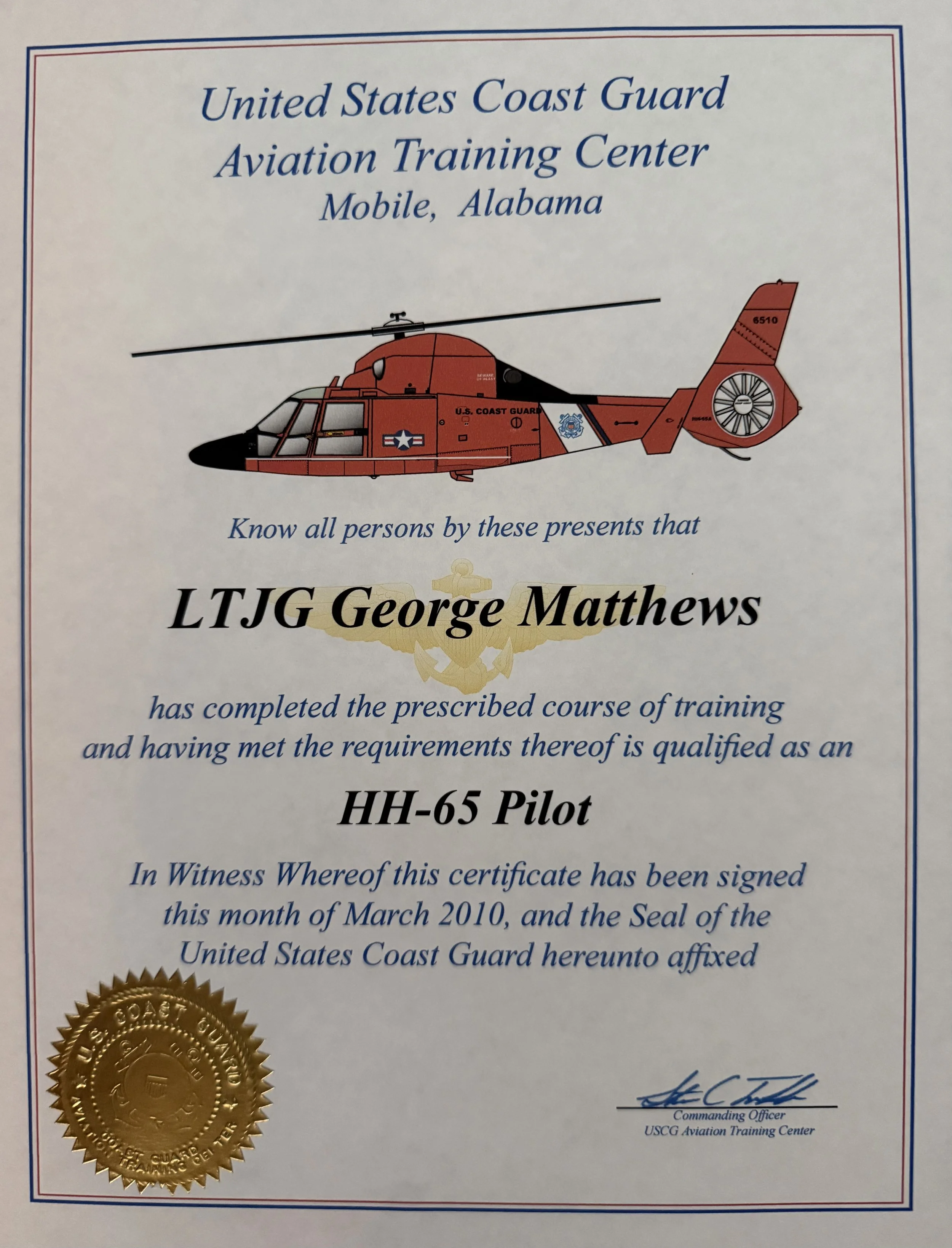
After a few more weeks of learning how to fly search patterns and hoist from the water, Ryan and I graduate from our transition course on March 31, 2010. I am officially designated Coast Guard Aviator #4239, the newest name in a list that begins with #1, Elmer Stone. I stare at that number and think about the four thousand aviators who have come before me. I realize it is not just about me anymore. I am part of something bigger, part of this “long blue line,” and I feel a tremendous responsibility to earn my place among some of the best pilots in the world.